

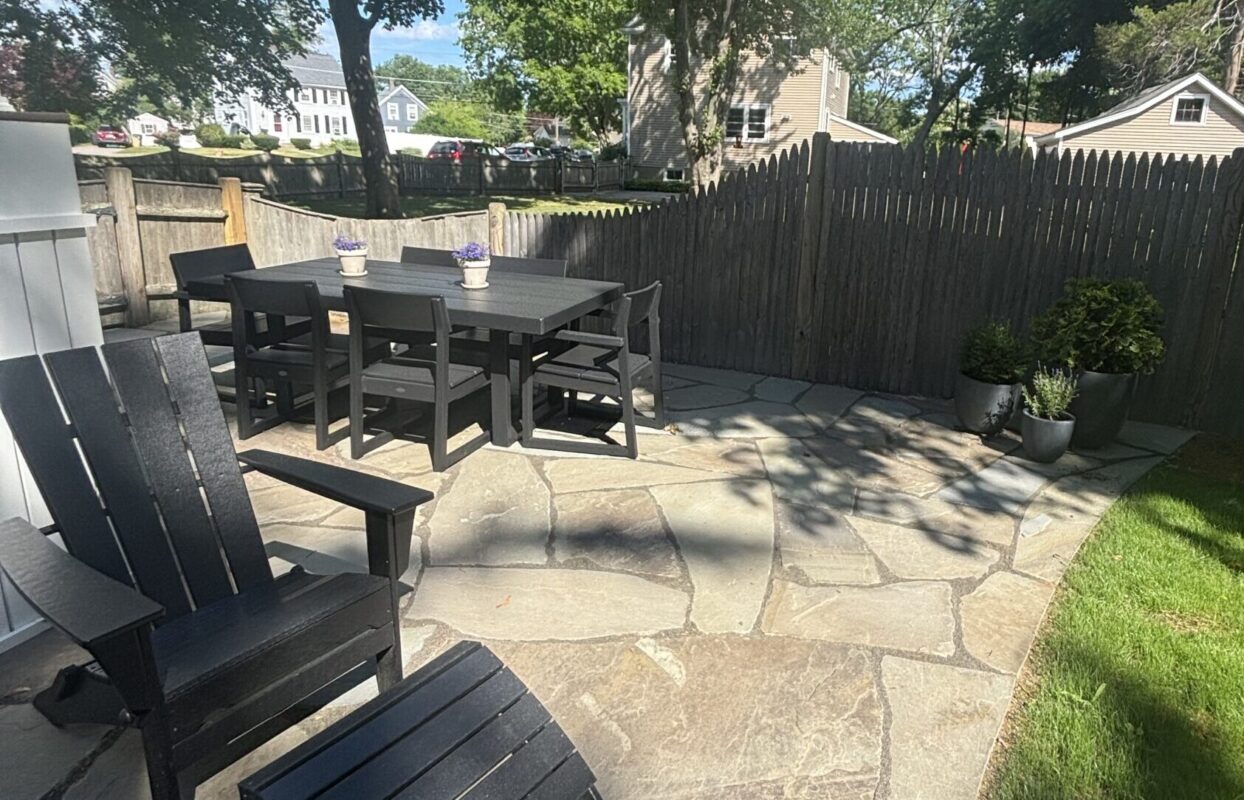
If you have started pricing out a custom patio, you already know the range you are seeing online is wide enough to be almost useless. A quote can land anywhere from $8,000 to $60,000 depending on materials, site conditions, and design complexity. This guide breaks down exactly what moves that number in Massachusetts specifically, so you can budget with confidence instead of guessing.
Why Massachusetts Patios Cost More Than the National Average
Before getting into materials and design, it helps to understand why patio installation cost in Massachusetts tends to run higher than the national average.
Frost heave and required excavation depth. Massachusetts sits in a frost line zone that typically requires excavation and base prep to 12 to 16 inches, compared to 6 to 8 inches in warmer climates. That extra excavation, gravel base, and compaction work adds labor and material cost before a single paver or slab goes down.
Permitting and local zoning. Many Massachusetts towns require a building permit for patios over a certain square footage, and some require setback compliance, drainage plans, or HOA approval in planned communities. Permit fees themselves are modest, usually $100 to $500, but the engineering or drainage documentation some towns require can add cost.
Labor market. Skilled hardscape labor in the Greater Boston area and surrounding suburbs commands a premium compared to national averages, reflecting both demand and cost of living.
Freeze thaw cycles. Massachusetts patios need construction methods (proper base depth, polymeric sand, or full mortar setting beds) that resist heaving and cracking through repeated freeze thaw cycles. Cutting corners here shows up as cracked pavers or shifted stone within two to three winters.
Materials: The Single Biggest Cost Driver
Material selection typically accounts for 40 to 60 percent of total custom patio cost. Here is how the common options compare for Massachusetts installations:
Concrete pavers Cost range: $15 to $25 per square foot installed The most common choice for custom outdoor living spaces in Massachusetts. Wide range of colors, patterns, and textures. Good freeze thaw performance when installed on a properly compacted base.
Natural bluestone Cost range: $25 to $40 per square foot installed A regional favorite given Massachusetts’s proximity to quarries. Comes in thermal (textured, slip resistant) or natural cleft finish. Higher material cost but strong resale appeal for affluent buyers who value authentic stone.
Natural fieldstone or flagstone Cost range: $30 to $50 per square foot installed Irregular shapes require more skilled labor to lay and fit, which drives up installation cost even though the material itself may be locally sourced.
Stamped concrete Cost range: $12 to $20 per square foot installed The most budget friendly custom option, offering the look of stone or brick at a lower price point. Can crack over time if the sub base is not properly prepared for frost movement.
Brick Cost range: $20 to $35 per square foot installed A classic look that pairs well with older New England homes, particularly in towns with historic district guidelines.
Material choice also interacts with design. Intricate patterns, mixed materials, or custom borders add labor cost regardless of which material you choose.
Site Conditions: What You Cannot See From the Yard
Site conditions are the most underestimated cost factor, and the one most likely to cause a quote to change after a contractor actually walks the property.
Slope and grading. A flat, easy access yard is the cheapest scenario. Sloped yards require retaining walls, additional excavation, or terracing, which can add $3,000 to $15,000 depending on severity.
Soil type. Much of Massachusetts sits on glacial till, which can include significant rock and ledge. Excavation that hits ledge often requires hydraulic hammering or blasting, a cost that is difficult to estimate until digging begins. Some contractors build a ledge contingency into contracts specifically because of this risk.
Access. Backyards without direct equipment access (through a narrow side yard, over a fence, or behind a pool) may require materials to be moved by hand or with smaller equipment, adding labor hours.
Existing structures. Removing an old concrete patio, deck footings, or overgrown landscaping adds demolition cost before the new install even starts, typically $2 to $6 per square foot for demolition and disposal.
Drainage: The Factor That Determines Long Term Cost
Drainage is where many patio projects go wrong, and where cutting cost upfront creates expensive problems later.
Massachusetts’s combination of heavy spring runoff, clay heavy soil in some regions, and freeze thaw cycles means a patio without proper drainage planning can experience:
- Standing water that accelerates paver settling
- Ice buildup that creates a liability risk near entryways
- Water intrusion into a home’s foundation if the patio is graded incorrectly
Proper drainage design typically adds $1,500 to $5,000 to a project, depending on whether it requires a simple grade away from the house, a French drain system, a dry well, or a full catch basin and piping. For homeowners building an outdoor oasis, this is not optional. It is the line item that protects every other investment on the project.
Design Choices That Add Up
Beyond materials and site work, design decisions shape the final custom patio cost:
Multi level patios. Tiered designs connecting a patio to a pool, fire pit, or lower yard area require retaining structures and additional grading, often adding 20 to 40 percent to base cost.
Built in features. Fire pits, outdoor kitchens, seat walls, and pergolas are frequently bundled into patio construction quotes. Each adds both material and labor cost, and often electrical or gas line work.
Lighting. Low voltage landscape lighting integrated into a patio design typically adds $2,000 to $6,000 depending on scope.
Custom patterns and borders. A herringbone paver pattern with a contrasting soldier course border costs more in labor than a simple running bond pattern, even using identical material.
Typical Cost Ranges by Project Size
For a general sense of where custom patio cost lands in Massachusetts:
- Small patio (200 to 300 sq ft): $8,000 to $18,000
- Mid size patio (400 to 600 sq ft): $18,000 to $35,000
- Large patio with features (700 sq ft plus, fire pit, lighting, seat walls): $35,000 to $70,000+
These ranges assume moderate site conditions. Significant ledge, steep grade, or extensive drainage work can push any of these ranges higher.
Questions to Ask Before You Sign a Contract
A few questions separate an accurate quote from one that will change mid project:
- Does the quote include a ledge or rock excavation contingency?
- What drainage solution is included, and is it itemized separately?
- What base depth and material is specified for Massachusetts frost conditions?
- Is demolition and disposal of existing structures included?
- What warranty is offered on settling, cracking, or drainage issues?
Final Thoughts
Custom patio cost in Massachusetts is driven less by the price per square foot of material and more by what is underneath and around the patio: soil, grade, drainage, and frost protection. Homeowners who budget for these factors upfront, rather than treating them as add ons, tend to end up with a patio that holds up through New England winters instead of one that needs repair by year three.
If you are planning a custom outdoor living space, get a site walk before you compare quotes on price alone. Two bids for the same square footage of bluestone can differ by thousands of dollars simply based on how much attention each contractor is paying to what is under the surface.
Start with a design consultation:
https://landdesignassociates.com/design-build-form/
Or explore our work here:
https://landdesignassociates.com/featured-projects/