

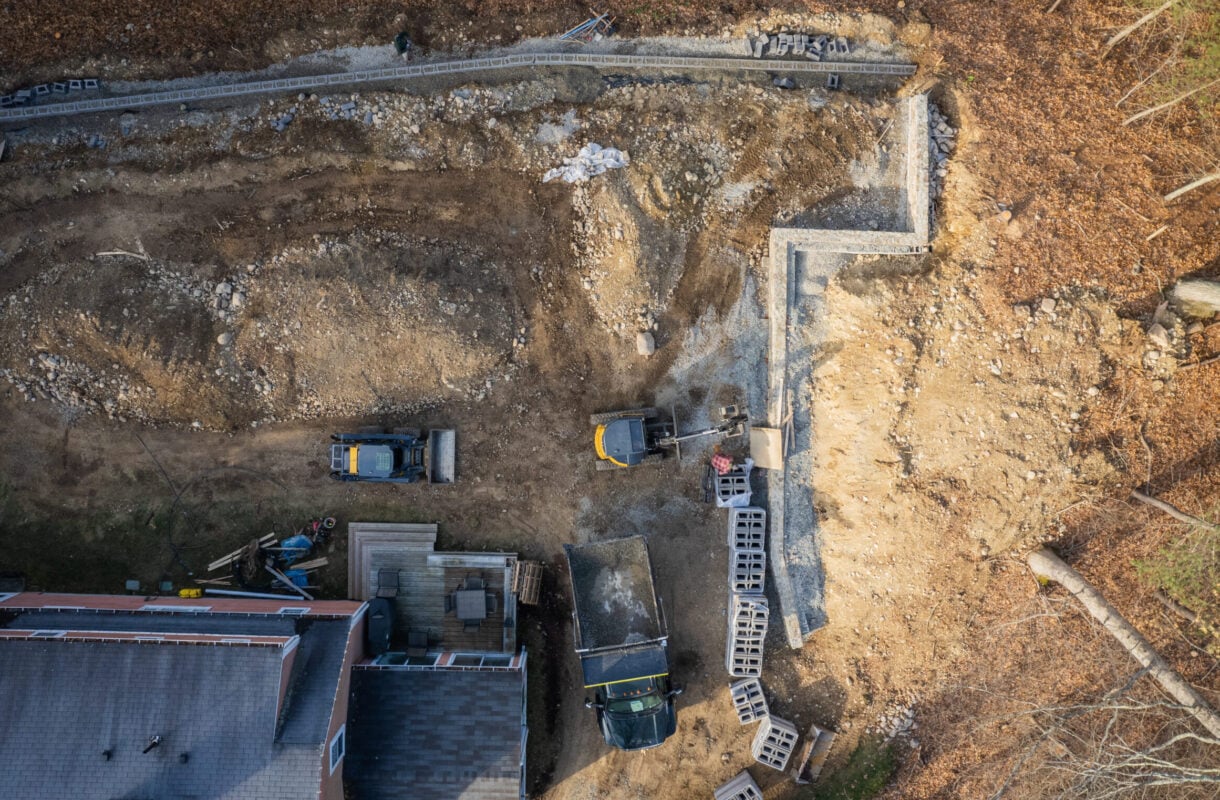
Walpole landscape design works best when it follows a clear process. Most homeowners who end up unhappy with a yard they paid for skipped a step: they bought plants before fixing drainage or built a patio before deciding how they would actually use it.
This guide walks through how a backyard redesign works, from the first conversation to a garden that keeps getting better for years. If you’re thinking about redesigning your yard in Walpole or a nearby town, here’s what to expect at each step, and where projects most often go wrong.
In this guide
- Step 1: Start with how you live
- Step 2: What should a designer look at on your property?
- Step 3: Create the design
- Step 4: Who builds a landscape design?
- Step 5: Let it grow in
- Mistakes we see most often in Walpole yards
- Frequently asked questions
Step 1: Start with how you live
A good landscape design starts with questions about your life, not about plants. Before we draw anything, we want to understand how you’ll use the space.
In a first meeting, we typically ask:
- How do you spend evenings and weekends at home?
- Do you entertain? How many people, and how often?
- Who uses the yard: kids, pets, older family members?
- What do you like about the yard now, and what bothers you?
- How much time do you want to spend maintaining it?
- What’s your rough budget, and do you want to build all at once or over time?
The answers often surprise people. A family that came in asking for a bigger deck may really need privacy. A couple that wanted “more flowers” may really want a garden they can enjoy without weekend weeding.
Writing these goals down at the start keeps the whole project focused. Every later decision gets checked against them.
Step 2: What should a designer look at on your property?
A designer should study sun and shade, soil, drainage, slope, existing trees, views, and any rules that limit what you can build. These conditions decide which plants will thrive, where a patio belongs, and what problems need fixing before anything goes in the ground.
On a site visit, we measure the property and note:
- Light: which areas get full sun, part shade, or deep shade, and how that changes through the day
- Soil: soils in this part of Massachusetts range from sandy to heavy and rocky, and the difference matters for every plant choice
- Water: where rain flows, where it collects, and where downspouts drain
- Grade: slopes that need walls, steps, or regrading
- What’s worth keeping: mature trees, healthy shrubs, stone walls, and good views
- Rules: setbacks, easements, HOA guidelines, and nearby wetlands
That last point matters in Walpole. Work near wetlands, streams, or ponds may need review by the town’s Conservation Commission before it starts. It’s far better to learn that during design than halfway through construction.
For soil, a test from the UMass Soil and Plant Nutrient Testing Laboratory is inexpensive and tells you exactly what you’re working with.
Step 3: Create the design
With your goals and the site conditions in hand, the design comes together in two stages.
The concept
First comes a rough layout: where the patio goes, how paths connect the spaces, where privacy plantings belong, and how the yard flows from the house outward. This is the stage to react, question, and change your mind. Moving a patio on paper costs nothing.
The final plan
After revisions, the concept becomes a detailed plan you can build from. A complete landscape design plan typically includes:
- A scaled layout of every space, path, and feature
- Hardscape materials, such as stone, pavers, gravel, and edging
- A planting plan with a plant list, quantities, and placement
- Notes on drainage, grading, and lighting where needed
- A phasing plan, if you’ll build over more than one season
Choosing the right plants
Plant selection is where many DIY projects go wrong. We choose plants for the conditions each spot actually has and for how big they’ll be in ten years, not how they look in a nursery pot. A shrub that fits nicely under a window today can swallow it in five years.
We also lean on plants that handle New England winters and support local wildlife. For ideas, the Native Plant Trust is an excellent regional resource.
Step 4: Who builds a landscape design?
A landscape contractor builds the design. When you own the finished plan, you can take it to several contractors and compare bids on exactly the same scope of work. That makes it far easier to judge whether a price is fair.
When reviewing bids, look for:
- A license and insurance, plus references from recent jobs
- A clear, itemized scope that matches the plan
- A realistic schedule and payment terms
- Experience with the materials and plants in your design
Building in phases
You don’t have to build everything at once. A complete plan makes phasing work, because every piece is designed to fit the whole. A common order is:
- Grading, drainage, and hardscape. Fix the site and build patios, walls, and paths first, since they’re the hardest to change later.
- Major planting. Add trees, privacy borders, and the main beds.
- Finishing touches. Add lighting, accent plantings, and smaller features.
Each phase should look finished on its own, so your yard never feels half-done while you spread out the cost.
Not sure who does what on a project like this? See our guide to landscape architects vs. landscape designers vs. contractors.
Step 5: Let it grow in
A new garden on installation day is the least impressive it will ever be. Gardeners have an old saying about perennials: the first year they sleep, the second year they creep, and the third year they leap.
The first season matters most. New plants need steady, deep watering while their roots establish, especially through a dry New England summer. After that, a well-designed garden should need less work each year, not more.
The best measure of a landscape design isn’t how it looks the week it’s finished. It’s whether you’re still using and enjoying the space years later, and whether it keeps getting better as it matures.
Mistakes we see most often in Walpole yards
Most disappointing landscape projects fail for the same few reasons. Each one is easy to avoid with a plan.
- Buying before deciding. A patio or a new bed is a solution. Figure out the problem first.
- Planting before fixing the site. Drainage, grading, and soil problems only get more expensive once plants and stone are in the ground.
- Planning for week one, not year ten. Overcrowded shrubs and trees planted too close to the house are the most common problems we’re asked to fix.
- Building piece by piece without a plan. Projects added one at a time over the years rarely feel like they belong together.
- Calling in April. Designers and contractors book up fast once spring arrives. Winter is planning season.
Frequently asked questions
How long does a landscape design take?
For a typical backyard, the design phase usually takes several weeks from the first site visit to a finished plan. That includes measuring the property, a first concept, and revisions. Larger or more complex properties take longer. Installation time depends on the project’s size, the contractor’s schedule, and whether you build in phases.
When should I start planning a spring landscaping project in Massachusetts?
Start in late fall or winter. Designers and contractors book up quickly once the weather turns warm. Planning between November and February gives you time to finish the design, collect bids, and get on a contractor’s spring schedule before the rush.
Do I need a permit for landscaping in Walpole?
Simple planting usually doesn’t need a permit. Tall retaining walls, major grading, or any work near wetlands or streams may require approval. In Massachusetts, work near wetland areas typically needs review by the local Conservation Commission. Check with the Walpole Building Department and Conservation Commission before you start.
Can I install a landscape design in phases?
Yes. A complete plan is what makes phasing work. Most clients start with grading, drainage, and hardscape like patios, then add planting and lighting in later phases. Each phase is designed to look finished on its own, so your yard never feels half-done while you spread out the cost.
Do I need a landscape architect or a landscape designer?
For most residential yards, a landscape designer is the right fit. You need a licensed landscape architect when a project requires stamped drawings, serious engineering such as tall retaining walls or major drainage work, or work on commercial or public sites. Our full comparison explains the differences.
Ready to start your Walpole landscape design?
If your backyard isn’t working for how you live, a design plan is the place to start. We work with homeowners in Walpole and the surrounding towns.
Book a consultation and tell us about your yard. Winter is the best time to plan, so you’re ready to build when spring arrives.
Contact us today Contact Us | Boston Landscaping | Land Design Associates | 781.868.4392 to schedule a pre-season site walk and lock in your spot for the 2026–2027 winter.