Exterior Lighting Costs in Massachusetts for 2026

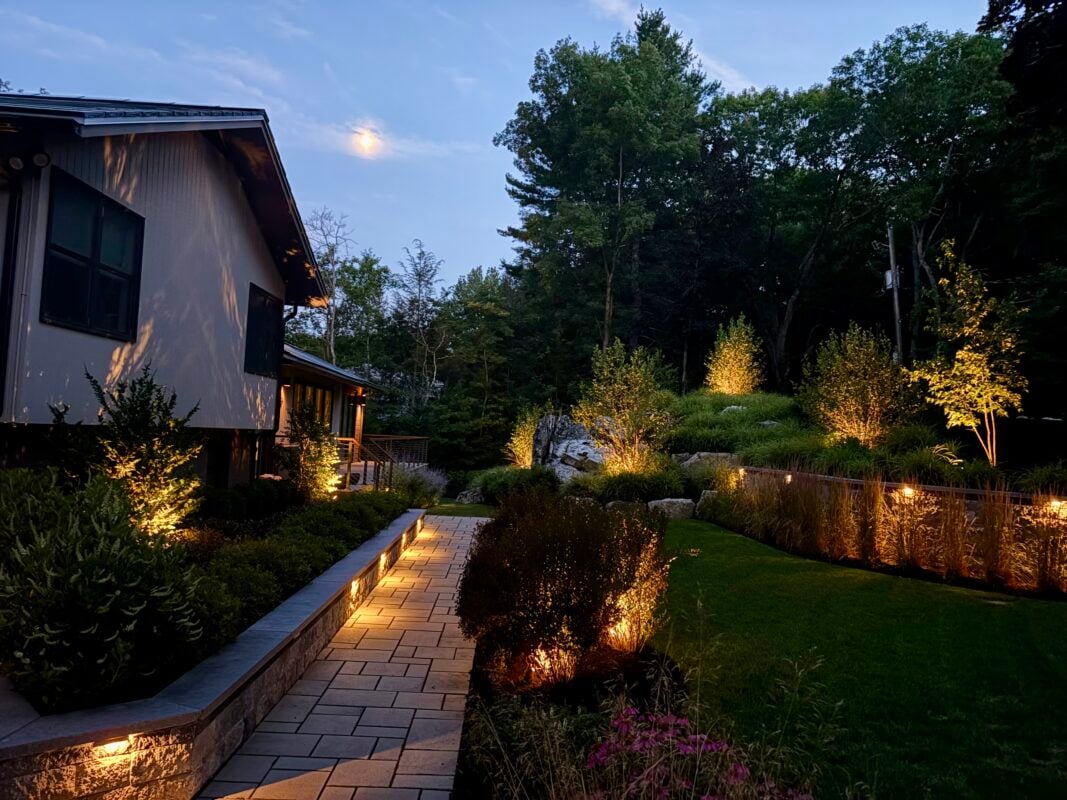
Landscape lighting design at dusk showing uplit trees and pathway lighting — Massachusetts exterior lighting cost guide
If you’re pricing out exterior lighting for your Massachusetts home in 2026, the direct answer is this: a basic low-voltage lighting package with a handful of path lights and a couple of accent fixtures runs $1,500 to $5,000. A professionally designed system for an average-sized property, with 15 to 25 fixtures covering pathways, plantings, and architectural accents, typically lands between $5,000 and $15,000. A full custom lighting design for a larger property, integrated with hardscape, smart controls, and tree uplighting, can run $15,000 to $35,000 or more. High-end architectural and landscape lighting tied into a pool or outdoor kitchen build often pushes past $35,000.

Here’s what actually drives the number up or down, and where homeowners tend to over- or under-spend.

Why “Landscape Lighting” Costs More Than a Box of Path Lights

A handful of solar path lights from a hardware store and a designed exterior lighting system are not the same category of project, even though homeowners often budget for one while picturing the other. A designed system involves a low-voltage transformer sized correctly for the fixture load, buried or protected wiring runs, fixtures selected and placed for specific effects (uplighting, downlighting, grazing, silhouetting), and a control system that lets the lighting change with the seasons or time of day.

The gap between “a few lights in the yard” and “a lighting system” is almost entirely design and electrical labor, not fixture cost. This is the same pattern seen in outdoor kitchens and poolscapes: the individual components are affordable, but a coherent, code-compliant system built around them is where the real cost sits.

Cost Breakdown by Category

Fixtures (path, spot, well, and up-lights): $75–$300 per fixture for quality brass or copper housings. Solid brass and copper fixtures are the standard for professional installations because they don’t corrode or degrade under UV exposure the way cheaper aluminum or plastic fixtures do, which matters over a New England winter-to-summer cycle. A typical mid-size project uses 15 to 30 fixtures.

Low-voltage transformer and wiring: $300–$1,500 for the transformer, plus labor for trenching and running direct-burial cable to each fixture location. Transformer sizing has to account for total wattage load with headroom for future additions, which is a common point where DIY systems fail — an undersized transformer either underpowers fixtures or burns out.

Design and layout: Often bundled into installation pricing rather than itemized separately, but a proper lighting design plan (fixture placement, aiming angles, wattage calculations) is where the visual outcome is actually decided. Skipping this step is the single biggest reason exterior lighting ends up looking flat or uneven despite a reasonable fixture budget.

Architectural and facade lighting: $2,000–$10,000+ depending on the size of the home and number of features highlighted (columns, stonework, gables, entryways). This is typically priced per fixture location plus the electrical work to route wiring along the house exterior without visible conduit.

Tree and specimen uplighting: $150–$400 per tree, including fixture, wiring, and staking or mounting. Mature trees on Massachusetts properties are often the highest-impact, lowest-cost lighting investment available, since a single well-placed uplight on an established tree does more visual work than several path lights combined.

Smart controls and automation: $500–$3,000 for app-based or smart-home-integrated control systems that allow zone control, dimming, and scheduling. This has become close to standard on mid-to-high-end installations rather than a rare upgrade, largely because it lets homeowners run different lighting scenes for everyday use versus entertaining without an electrician revisiting the site.

Line-voltage additions (security floodlights, motion-sensor fixtures): $200–$600 per fixture installed, higher than low-voltage because it requires licensed electrical work on the home’s main electrical panel rather than a low-voltage transformer circuit.

Where Homeowners Overspend Without Getting More Value

Too many fixtures spread evenly across the property. Even spacing looks like an airport runway, not a designed landscape. A smaller number of well-placed fixtures aimed at specific features almost always reads as more intentional and more expensive-looking than a large number of evenly spaced generic path lights.

Buying fixtures before finalizing a design. Purchasing fixtures first and figuring out placement later is one of the most common ways budgets balloon, since it frequently means buying the wrong fixture type, wrong finish, or wrong wattage for the eventual layout and having to replace it.

Overlighting the front of the house while ignoring the backyard. Curb appeal lighting matters, but for homeowners who actually use their backyard in the evening, the outdoor living space benefits more from lighting investment per dollar spent than the street-facing facade does.

Where It’s Worth Spending More

Professional design over DIY layout. Given how much of the visual result depends on aiming angles and fixture selection rather than raw fixture count, paying for a design phase upfront tends to prevent costly rework and consistently outperforms a self-planned layout at the same fixture budget.

Solid brass or copper fixtures over budget alternatives. The price difference is real, but budget fixtures in a Massachusetts climate — freeze-thaw cycles, road salt exposure near driveways, humidity — tend to corrode or fail within a few years, making the “savings” temporary.

Zone-based smart controls. For properties that host outdoor gatherings or have distinct areas (entry, patio, garden beds), zone control is one of the highest-usability upgrades available, since it lets the same system serve very different lighting needs without rewiring.

Integrating lighting design with hardscape and planting plans from the start. Lighting added as an afterthought to an already-completed patio or landscape almost always costs more than lighting planned alongside it, since retrofitting wiring around finished hardscape or mature plantings is more labor-intensive than running it during initial construction.

Frequently Asked Questions

How much does exterior lighting cost in Massachusetts in 2026? A basic low-voltage system runs $1,500 to $5,000. A professionally designed mid-size system typically costs $5,000 to $15,000. Larger, fully integrated systems with architectural lighting and smart controls run $15,000 to $35,000 or more.

Is low-voltage or line-voltage lighting better for landscape lighting? Low-voltage is the standard for landscape and accent lighting because it’s safer to install near plantings and walkways, more energy-efficient, and doesn’t require the same electrical permitting as line-voltage work. Line-voltage is typically reserved for security floodlights and fixtures requiring higher output.

Do I need a permit for exterior lighting in Massachusetts? Low-voltage landscape lighting generally doesn’t require a permit, but any work tying into a home’s main electrical panel, including most line-voltage additions, typically requires a licensed electrician and may require local permitting. Requirements vary by municipality.

How long does exterior lighting installation take? A basic system can often be installed in one to two days. A larger, fully designed system with trenching, architectural lighting, and smart controls typically takes one to two weeks, depending on property size and site conditions.

Does exterior lighting increase home value? While lighting alone is rarely appraised as a standalone value-add the way a finished basement might be, it’s consistently cited as one of the highest-return curb-appeal investments because it improves both the evening appearance of a property and buyer perception of overall maintenance and design intent.


Ready to design an exterior lighting system built for how you actually use your property? [Schedule a free lighting design consultation] with Land Design Associates, serving Walpole and Norfolk County, MA.

Start with a design consultation:
https://landdesignassociates.com/design-build-form/

Or explore our work here:
https://landdesignassociates.com/featured-projects/

Book a Free Consultation