

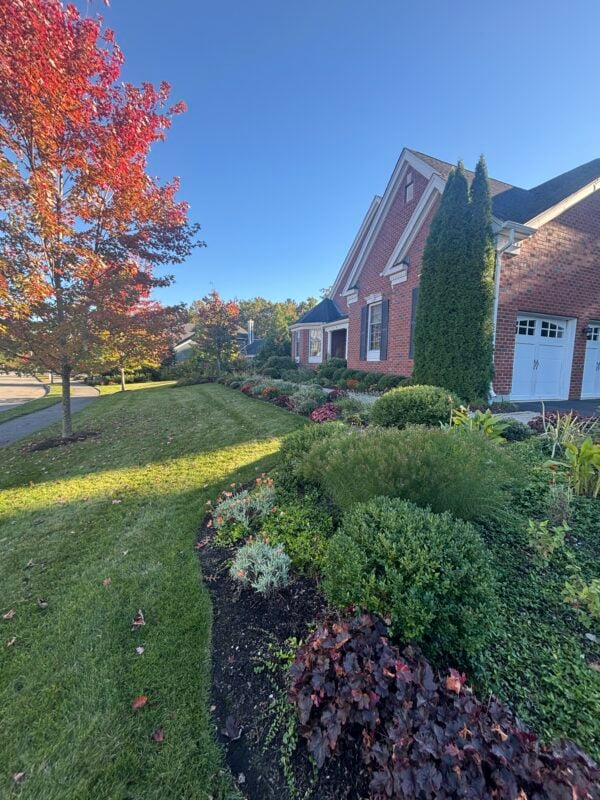
Most homeowners in New England spend summer weekends mowing, edging, weeding, and watering, and the yard still never looks finished. The problem usually isn’t effort. It’s design. Low maintenance landscape design starts with a different question: how much time do you actually want to spend on your yard each week?
For most of our clients, the answer is about two hours. With the right layout, plants, and materials, that’s a realistic target for a typical suburban lot. Here’s how we approach it at Land Design Associates, and what you can apply to your own property.
What a Two-Hour Yard Actually Looks Like
A two-hour yard isn’t a yard with no work. It’s a yard where the work is small, predictable, and spread out. During the growing season, a well-designed property in eastern Massachusetts usually needs about this much weekly care:
- Mowing a smaller lawn: 30 to 45 minutes
- Weeding and light deadheading: 20 to 30 minutes
- Checking irrigation and spot watering: 10 to 15 minutes
- Sweeping paths and general tidying: 15 to 30 minutes
To be honest about it, you’ll still need a few longer sessions each year: a spring cleanup, a fall cleanup, and occasional mulch top-ups. The goal of good design is to keep those seasonal jobs short and to make the weekly routine almost automatic.
Start With the Lawn: Shrink It, Don’t Eliminate It
Lawn is the single biggest time drain in most yards. It needs mowing every week, edging, fertilizing, watering through dry spells, and aerating. Yet many families use only a fraction of the grass they maintain.
The first step in creating a low maintenance yard is deciding how much lawn you really use. Keep a play area for kids or pets, or an open space for gatherings. Then convert the rest into planting beds, groundcovers, a small meadow, or hardscape.
Shape matters as much as size. Lawns with simple, broad curves are fast to mow. Narrow strips, tight corners, and grass growing around every tree and post add minutes to every mowing session. A flat stone or brick mowing strip along bed edges lets the mower run right along the border, so you skip most of the trimming.
Choose Low Maintenance Plants for New England
The easiest plants to care for are the ones suited to your site’s sun, soil, and moisture. Across New England, that usually means native plants and well-adapted perennials that tolerate cold winters, humid summers, and occasional drought.
Reliable low maintenance plants for New England yards include:
- Shrubs: inkberry holly (Ilex glabra), winterberry (Ilex verticillata), summer sweet (Clethra alnifolia), and bayberry (Myrica pensylvanica)
- Perennials: purple coneflower, black-eyed Susan, aromatic aster, and catmint
- Grasses: little bluestem and switchgrass, which add structure and winter interest
- Groundcovers: Pennsylvania sedge for dry shade and creeping phlox for sunny edges
Always plan for a plant’s mature size. A shrub that outgrows its space turns into an annual pruning job. Plant in groups rather than single specimens, and space plants so they knit together within two or three seasons. Dense planting shades the soil, which is one of the most effective ways to keep weeds from sprouting. For more local guidance, the UMass Amherst Extension landscape program publishes research-based advice for Massachusetts properties.
Design Planting Beds That Suppress Weeds
Weeding is the task homeowners hate most, and it’s largely a design problem. Bare soil invites weeds. Our goal in low maintenance landscape design is to leave as little bare soil exposed as possible.
Three techniques do most of the work:
- Mulch at the right depth. Two to three inches of shredded bark mulch blocks weed seeds from germinating. More than that can harm plant roots.
- Layer your plantings. Combine taller shrubs, mid-height perennials, and low groundcovers so every layer shades the one below it.
- Install clean edges. Steel, stone, or brick edging keeps lawn grass from creeping into beds, and it holds mulch in place.
We generally avoid landscape fabric under mulch in planting beds. Over time, mulch breaks down on top of the fabric, weeds root into it, and the fabric becomes difficult to remove.
Use Hardscape Where Plants Struggle
Hardscape is a core part of low maintenance landscape design. Some parts of a yard will never grow good grass: heavily shaded corners, high-traffic paths, and the strip beside the driveway. Instead of fighting those spots every year, turn them into hardscape.
A bluestone patio, a gravel path, or a set of natural stone steps needs almost no weekly attention. Permeable pavers and gravel also let rainwater soak into the ground, which helps with drainage and reduces runoff. Hardscape costs more to install than seed or sod, but it can save hours every season for decades.
Make Watering Automatic (or Unnecessary)
Hand-watering can quietly eat up more time than any other chore during a hot July. A drip irrigation system on a timer delivers water directly to plant roots, wastes less than sprinklers, and runs without you. A rain sensor or smart controller skips watering when the weather already did the job.
In low maintenance landscape design, grouping plants with similar water needs, sometimes called hydro zoning, makes irrigation more efficient. Better still, most native plants need little or no supplemental watering once they’re established, usually after their first one or two growing seasons.
Low Maintenance Landscaping Ideas That Backfire
Not every shortcut saves time. These popular low maintenance landscaping ideas often create more work later:
- Rock everywhere. Large areas of stone collect leaves and weed seeds, heat up in summer, and are hard to clean.
- Too few plants. Sparse beds leave bare soil that fills with weeds.
- Aggressive spreaders. Plants such as bishop’s weed and mint spread quickly and are very difficult to remove.
- Invasive shrubs. Burning bush and Japanese barberry are on the Massachusetts Prohibited Plant List, so they shouldn’t be planted at all.
- Cheap edging. Thin plastic edging heaves in frost and needs resetting every spring.
Is Low Maintenance Landscape Design Worth the Cost?
A thoughtfully designed yard often costs more to install than a basic lawn with foundation shrubs. The return comes over time: fewer hours spent on weekend chores, lower water bills, and less money spent on lawn services, fertilizer, and replacement plants.
When you compare costs, look at five to ten years rather than the first season. Many homeowners find that the time they get back is worth more than the upfront difference.
Frequently Asked Questions
How can I make my yard low maintenance?
Start by shrinking your lawn to the area you actually use. Replace the rest with dense plantings of native shrubs, perennials, and groundcovers, mulched two to three inches deep. Add clean bed edges, hardscape in high-traffic areas, and drip irrigation on a timer. Together, these changes remove most weekly chores.
What is the lowest maintenance landscaping?
The lowest maintenance landscaping combines a small lawn, densely planted native shrubs and perennials, groundcovers instead of bare mulch, and permanent hardscape such as stone patios and paths. Plants suited to the site’s sun, soil, and moisture need the least watering, pruning, and pest control over time.
How many hours a week does yard maintenance take?
A typical suburban yard with a large lawn can take four to eight hours a week during the growing season. A yard built with low maintenance landscape design can often be kept up in about two hours a week, plus seasonal cleanups in spring and fall.
What are the best low maintenance plants for New England?
Reliable choices include inkberry holly, winterberry, summer sweet, bayberry, purple coneflower, black-eyed Susan, aromatic aster, little bluestem, switchgrass, and Pennsylvania sedge. Most are native to New England, tolerate cold winters and dry spells, and need little care once established.
Is low maintenance landscaping worth the cost?
Usually, yes, when you measure over several years. Low maintenance landscaping can cost more to install, but it reduces weekly labor, water use, lawn service fees, and plant replacement costs. Homeowners often recover the difference in time and expenses within a few seasons.
Ready for a Yard That Takes Care of Itself?
Good low maintenance landscape design doesn’t happen by accident. It comes from a plan that fits your property, your budget, and how you want to spend your weekends. Land Design Associates provides residential landscape design for homeowners across New England from our base in Walpole, Massachusetts.
Tell us your site and your target start date, and we’ll map a realistic design and approval timeline with you.Contact Us | Boston Landscaping | Land Design Associates | 781.973.5102