

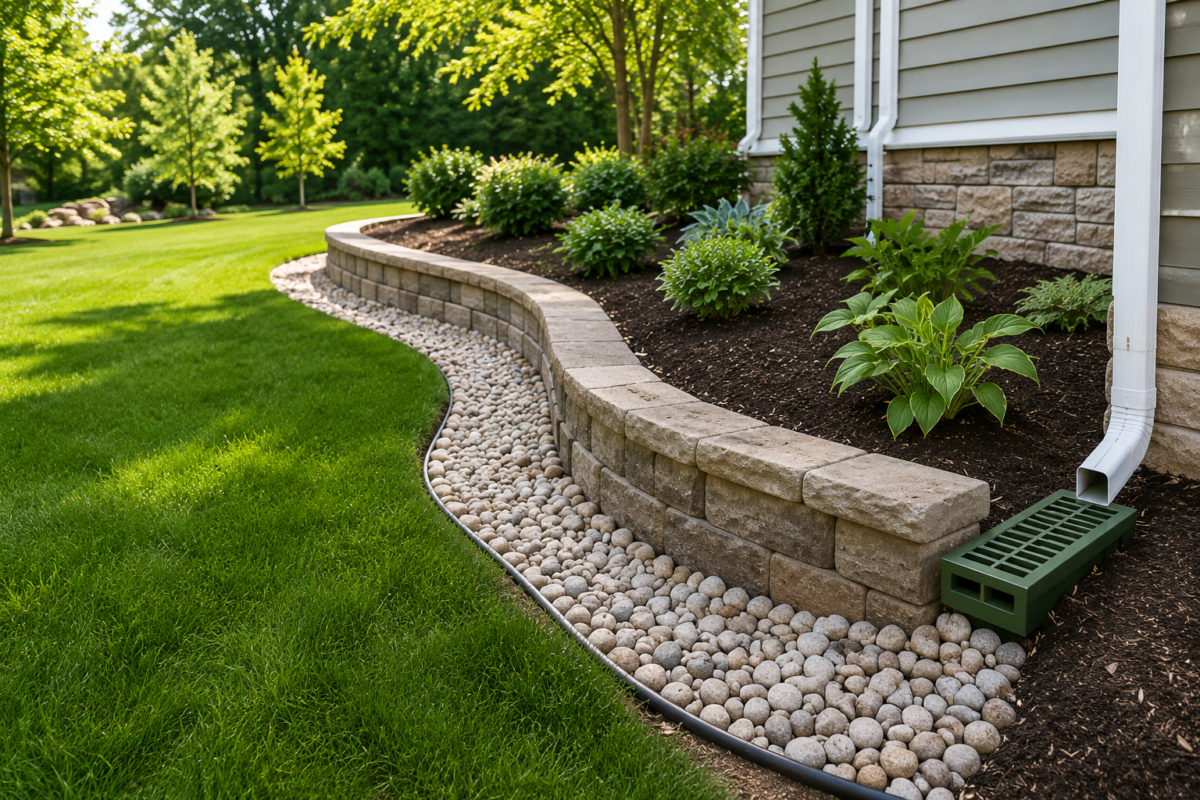
For many homeowners in Needham, a sloped property offers beautiful views, architectural character, and unique opportunities for outdoor living. However, sloped lots also present one of the most common and challenging issues in residential landscaping: water management. Without proper planning and installation, stormwater runoff can lead to erosion, foundation problems, flooded lawns, damaged plantings, and unusable outdoor spaces.
At Land Design Associates, we frequently work with homeowners throughout Massachusetts who are struggling with drainage issues caused by steep grades, poor soil conditions, improper runoff management, or aging drainage systems. While water is a natural part of every landscape, uncontrolled water can quickly become one of the most expensive problems a homeowner faces.
The good news is that effective drainage solutions can be seamlessly integrated into a property’s landscape design while enhancing both functionality and aesthetics. Through thoughtful landscape architecture and professional construction techniques, sloped properties can become beautiful, usable, and resilient outdoor environments.
In this article, we’ll explore common drainage challenges on sloped lots in Needham and the proven solutions that help protect homes and outdoor living investments.
Why Sloped Lots Create Drainage Challenges
Gravity is the primary reason sloped properties experience drainage issues.
When rain falls on a flat property, water generally has more time to infiltrate into the soil. On a slope, water naturally accelerates downhill, increasing both its speed and erosive potential.
Common drainage problems include:
- Soil erosion
- Washed-out mulch beds
- Standing water at the bottom of slopes
- Water entering basements
- Damaged retaining walls
- Lawn deterioration
- Exposed tree roots
- Hardscape settlement
- Foundation moisture issues
In Needham, many residential properties feature rolling terrain, mature landscapes, and varying soil conditions. During heavy New England rainstorms, large volumes of water can move across a property in a short period of time, overwhelming inadequate drainage systems.
Understanding how water moves through a site is the first step toward creating a successful solution.
The Importance of a Comprehensive Drainage Plan
One of the biggest mistakes homeowners make is treating drainage symptoms rather than addressing the underlying cause.
For example, simply adding topsoil to a muddy area may temporarily improve appearance, but it will not stop runoff from reaching that location.
A comprehensive drainage strategy evaluates:
- Existing grades
- Soil infiltration rates
- Roof runoff
- Downspout locations
- Surface water flow patterns
- Hardscape elevations
- Foundation conditions
- Neighboring properties
- Wetland constraints
At Land Design Associates, drainage planning begins with a detailed site analysis. By understanding how water behaves across the property, we can develop solutions that address the root cause rather than merely masking the problem.
Regrading: The Foundation of Effective Drainage
In many cases, the most effective drainage solution begins with grading.
Proper grading directs water away from structures and toward designated collection or infiltration areas. Even minor adjustments to elevations can dramatically improve drainage performance.
Regrading may involve:
- Reshaping lawn areas
- Creating gentle swales
- Adjusting patio elevations
- Modifying planting bed contours
- Improving surface runoff pathways
For sloped lots, grading must be carefully designed to balance drainage efficiency with aesthetics and usability.
A professionally graded property often appears completely natural while quietly directing water away from vulnerable areas.
French Drains: Capturing Subsurface Water
French drains are one of the most common drainage solutions used on sloped properties.
A French drain consists of:
- A gravel-filled trench
- Perforated drainage pipe
- Filter fabric
- Controlled discharge point
As water moves through the soil, it enters the trench and is collected by the perforated pipe before being redirected away from problem areas.
French drains are particularly effective for:
- Wet lawns
- Saturated planting beds
- Foundation drainage
- Retaining wall drainage
- Hillside runoff interception
When properly designed and installed, French drains can remain highly effective for decades.
Dry Wells: Managing Roof Runoff
Many drainage issues begin with the roof.
During a heavy rainstorm, thousands of gallons of water may be discharged through downspouts in a single day. If that water is released near foundations or steep slopes, significant erosion and water damage can occur.
Dry wells provide an excellent solution.
A dry well is an underground chamber that collects runoff and allows it to slowly infiltrate into surrounding soils.
Benefits include:
- Reduced surface runoff
- Improved groundwater recharge
- Less erosion
- Protection of foundations
- Cleaner lawn areas
Dry wells are often paired with underground piping systems that collect water from multiple downspouts throughout the property.
Swales: Natural Surface Drainage
A swale is a shallow, gently sloped channel designed to direct water across a property.
Unlike traditional ditches, modern landscape swales are designed to blend naturally into the landscape.
Swales can be:
- Turf-covered
- Planted with ornamental grasses
- Enhanced with native vegetation
- Integrated into garden spaces
For larger Needham properties, swales often provide an attractive and environmentally friendly way to manage stormwater while preserving natural site character.
Retaining Walls and Terracing
Steep slopes sometimes require structural solutions.
Retaining walls help stabilize grades while creating usable outdoor living space.
Benefits include:
- Reduced erosion
- Improved drainage control
- Increased usable lawn area
- Better access throughout the property
- Enhanced aesthetics
Terraced landscapes divide a steep slope into multiple manageable levels, slowing water movement and reducing erosion.
Many luxury properties throughout Massachusetts use retaining walls as both functional drainage infrastructure and attractive design features.
Natural stone walls, granite block walls, and engineered retaining systems can all play an important role in water management.
Drainage Beneath Patios and Hardscapes
A common misconception is that patios eliminate drainage concerns.
In reality, hardscape surfaces generate significant runoff and require careful drainage planning.
Proper hardscape construction includes:
- Base preparation
- Pitch and slope calculations
- Drainage collection systems
- Edge stabilization
- Water management infrastructure
Without proper drainage, patios may experience:
- Settlement
- Frost heaving
- Surface pooling
- Structural damage
Professional landscape architecture considers drainage beneath the surface, not just what homeowners see above ground.
Channel Drains and Catch Basins
Some areas require active water collection.
Channel drains are narrow surface drains commonly installed along:
- Patios
- Driveways
- Pool decks
- Walkways
Catch basins collect larger volumes of runoff and direct water into underground drainage systems.
These solutions are particularly effective where concentrated runoff cannot be managed through grading alone.
When integrated into a comprehensive drainage plan, they help keep outdoor spaces functional even during heavy storms.
Native Plantings as a Drainage Solution
Plants can play a significant role in stormwater management.
Deep-rooted native species improve soil structure, increase infiltration, and reduce erosion.
Examples include:
- Switchgrass
- Little Bluestem
- Joe-Pye Weed
- Inkberry Holly
- Red Twig Dogwood
- Winterberry Holly
Native plantings can be strategically placed to:
- Stabilize slopes
- Absorb runoff
- Filter pollutants
- Enhance biodiversity
For homeowners seeking environmentally responsible solutions, native landscapes offer both ecological and aesthetic benefits.
Rain Gardens for Sustainable Water Management
Rain gardens have become increasingly popular throughout Massachusetts.
A rain garden is a shallow planted depression designed to temporarily collect and infiltrate stormwater.
Benefits include:
- Reduced runoff
- Improved water quality
- Pollinator habitat
- Seasonal beauty
- Lower erosion risk
Rain gardens work particularly well near downspouts, driveway runoff areas, and low points on sloped properties.
When designed correctly, they become attractive landscape features rather than obvious drainage infrastructure.
Protecting Foundations from Water Damage
One of the most important goals of drainage planning is protecting the home itself.
Water that collects near a foundation can lead to:
- Basement leaks
- Hydrostatic pressure
- Mold growth
- Structural deterioration
- Foundation settlement
Proper drainage strategies direct water away from structures before it becomes a problem.
For many homeowners, addressing drainage concerns early can prevent costly repairs in the future.
Why Professional Drainage Design Matters
Every property is different.
What works on one site may not work on another.
Successful drainage design requires understanding:
- Topography
- Soil conditions
- Hydrology
- Construction methods
- Municipal regulations
- Long-term maintenance requirements
At Land Design Associates, we approach drainage as a critical component of the overall landscape design process. Rather than treating drainage systems as an afterthought, we integrate them into the property’s landscape architecture from the beginning.
This approach creates outdoor spaces that are not only beautiful but also durable and functional.
Investing in Long-Term Property Performance
Drainage solutions may not be the most visible aspect of a landscape project, but they are often among the most important.
Proper drainage protects:
- Homes
- Patios
- Pools
- Retaining walls
- Plantings
- Lawns
- Outdoor living areas
For homeowners in Needham, investing in professional drainage planning can improve property value, reduce maintenance costs, and create a more enjoyable outdoor environment.
By combining engineering expertise, thoughtful landscape design, and quality construction, drainage challenges can be transformed into opportunities for creating a healthier, more resilient landscape.
Whether your property suffers from erosion, standing water, basement moisture, or runoff concerns, the right solution begins with understanding how water moves through the landscape. With proper planning and professional installation, even the most challenging sloped lot can become a functional, beautiful, and sustainable outdoor space for years to come.
Start with a design consultation:
https://landdesignassociates.com/design-build-form/
Or explore our work here:
https://landdesignassociates.com/featured-projects/