

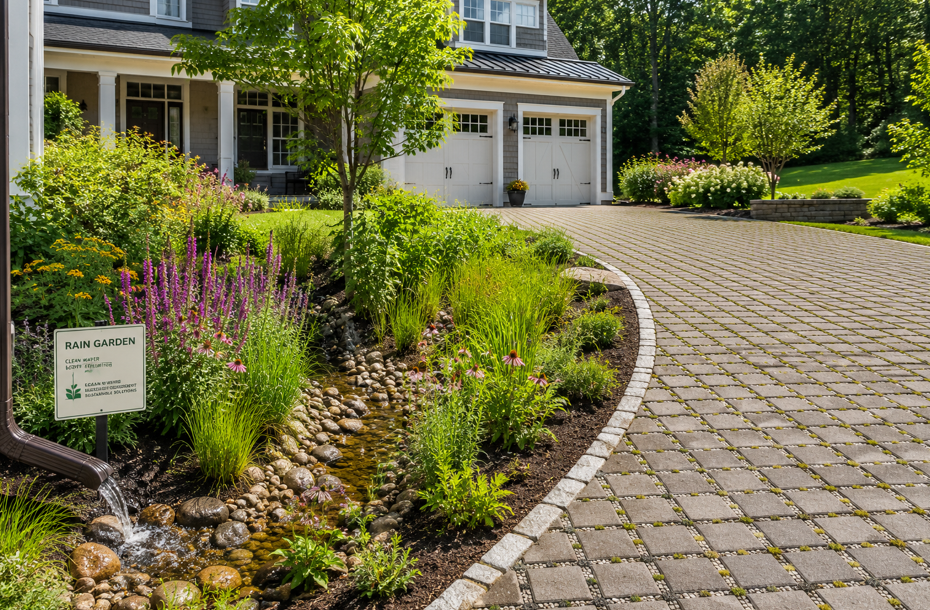
As communities across Massachusetts experience heavier rainfall events and increasing pressure on local drainage systems, property owners are looking for smarter ways to manage stormwater while improving the beauty and function of their landscapes.
From Hingham and Cohasset to Duxbury and communities throughout the South Shore, sustainable landscape design is becoming an essential part of responsible property stewardship. One of the most effective approaches is designing landscapes that work with rainwater rather than fighting against it.
Rain gardens, permeable paving systems, bioswales, and native plantings help reduce runoff, improve water quality, and create attractive outdoor environments that support local ecosystems.
Why Stormwater Runoff Is a Growing Concern
When rain falls on natural landscapes, much of the water infiltrates into the soil where it is filtered and absorbed. However, modern development often replaces natural ground surfaces with roofs, driveways, patios, and roads.
These impervious surfaces prevent water from soaking into the ground. Instead, rainfall becomes stormwater runoff that flows across surfaces and into storm drains, carrying pollutants, fertilizers, sediments, and debris into nearby rivers, streams, wetlands, and coastal waters.
In South Shore communities such as Hingham, Cohasset, and Duxbury, stormwater runoff can contribute to:
- Localized flooding
- Erosion
- Drainage issues
- Water quality degradation
- Coastal ecosystem impacts
- Increased municipal infrastructure demands
Fortunately, sustainable landscape design offers practical and visually appealing solutions.
What Is a Rain Garden?
A rain garden is a shallow landscaped depression designed to collect and temporarily hold stormwater runoff from roofs, driveways, patios, and lawns.
Rather than directing rainwater immediately into storm drains, a rain garden allows water to slowly infiltrate into the soil where it is naturally filtered and absorbed.
Rain gardens are typically planted with deep-rooted native species that tolerate both wet and dry conditions.
Benefits of Rain Gardens
- Reduce stormwater runoff
- Improve groundwater recharge
- Filter pollutants naturally
- Support pollinators and wildlife
- Enhance curb appeal
- Reduce erosion
- Create seasonal visual interest
For many Massachusetts homeowners, rain gardens provide a simple yet highly effective way to manage drainage challenges while adding beauty to the landscape.
How Rain Gardens Work
During a rainfall event, water is directed into the garden through grading, downspouts, drainage channels, or surface flow.
The planted area temporarily stores runoff before allowing it to infiltrate through engineered soil layers. Native plants help absorb moisture while improving soil structure and filtration.
Properly designed rain gardens can capture thousands of gallons of stormwater annually, reducing the burden on local drainage infrastructure.
Native Plants for Massachusetts Rain Gardens
Native plants play an important role in rain garden performance because they are adapted to local conditions and support regional biodiversity.
Popular selections include:
- Switchgrass
- Joe Pye Weed
- Blue Flag Iris
- New England Aster
- Cardinal Flower
- Black-Eyed Susan
- Winterberry Holly
- Red Twig Dogwood
These species provide year-round interest while helping manage water naturally.
What Are Permeable Pavers?
Permeable paving systems allow rainwater to pass through the surface and into a specially designed aggregate base below.
Unlike traditional asphalt or concrete, permeable pavers reduce runoff by encouraging infiltration directly where rainfall occurs.
Common applications include:
- Driveways
- Walkways
- Courtyards
- Patios
- Parking areas
- Commercial plazas
How Permeable Paving Helps Manage Stormwater
Permeable paving systems work by allowing water to flow through joints or porous surfaces into underground stone reservoirs.
This process:
- Reduces surface runoff
- Minimizes puddling
- Improves water quality
- Supports groundwater recharge
- Reduces pressure on storm drains
For coastal South Shore communities where drainage can be challenging, permeable paving provides both environmental and practical benefits.
Are Permeable Pavers Worth the Investment?
Many homeowners ask whether permeable pavers justify their cost.
While installation costs can exceed traditional pavement systems, permeable surfaces often provide long-term value through:
- Reduced drainage infrastructure
- Lower maintenance requirements
- Enhanced property aesthetics
- Increased sustainability
- Improved site performance
In many projects, the environmental and functional benefits significantly outweigh the initial investment.
Combining Rain Gardens and Permeable Paving
The most successful sustainable landscapes often combine multiple stormwater management strategies.
A comprehensive design may include:
- Rain gardens
- Permeable driveways
- Native plantings
- Bioswales
- Infiltration areas
- Strategic grading
Together, these systems create a resilient landscape capable of managing rainfall naturally while enhancing outdoor living spaces.
Sustainable Landscaping Across the South Shore
Homeowners and commercial property owners throughout Hingham, Cohasset, Duxbury, and the greater South Shore are increasingly incorporating sustainable design principles into their landscapes.
Benefits include:
- Improved drainage
- Reduced environmental impact
- Enhanced property value
- Lower long-term maintenance
- Greater resilience to extreme weather
Whether designing a new landscape or renovating an existing property, stormwater-conscious planning delivers both ecological and economic advantages.
Designing for the Future
As climate patterns continue to evolve, landscapes must do more than look attractive. They must perform.
Rain gardens, permeable paving, and sustainable site planning provide effective solutions for managing water responsibly while creating beautiful, functional outdoor spaces.
At Land Design Associates in Walpole, Massachusetts, our team integrates thoughtful landscape architecture with sustainable stormwater management strategies tailored to the unique conditions of each property.
By designing for rainwater, property owners can protect natural resources, improve site performance, and create landscapes that remain resilient for generations to come.
Looking for Sustainable Landscape Design in Hingham, Cohasset, Duxbury, or Throughout the South Shore?
Contact Land Design Associates to learn how rain gardens, permeable paving systems, and environmentally responsible landscape architecture can enhance your property while supporting long-term sustainability.
Schedule Your Landscape Design Consultation Today
If you are planning a project and need landscape design in Walpole, MA or landscape design in Hingham, Duxbury and Cohasset, MA, working with the right team makes all the difference.
Land Design Associates is ready to help you design and build an outdoor space that is functional, durable, and built around your lifestyle.
Start with a design consultation:
https://landdesignassociates.com/design-build-form/
Or explore our work here:
https://landdesignassociates.com/featured-projects/