

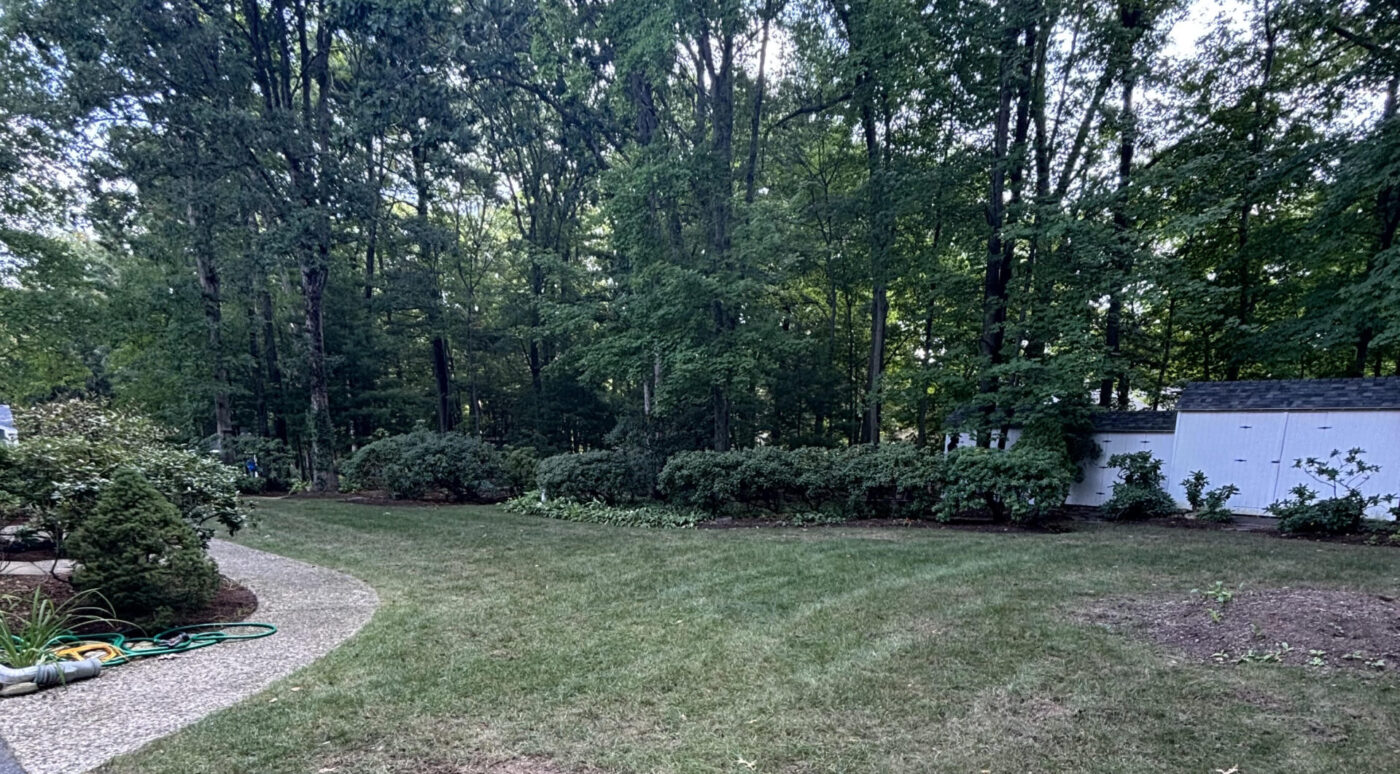
By the end of summer, most New England lawns are worn out. Heat, dry spells, grubs, cookouts, and kids’ games leave thin patches, bare spots, and soil packed hard as a sidewalk. The good news is that the best fix happens to line up with the best season to do it. Fall aeration and overseeding is the single most effective thing you can do to get a thicker, healthier lawn next spring.
Here’s why fall timing works so well in New England, when to schedule it, and how to care for new seed so it actually takes.
What Aeration and Overseeding Actually Do
Core aeration uses a machine that pulls small plugs of soil, usually 2 to 3 inches deep, out of your lawn. Those holes relieve compaction and let air, water, and nutrients reach the roots. The plugs left on the surface break down on their own within a couple of weeks.
This is different from spike aeration, which pokes holes without removing soil. Spiking can press the surrounding soil even tighter, so core aeration is the method turf professionals recommend.
Overseeding means spreading grass seed over your existing lawn to fill in thin areas and introduce stronger grass varieties. Done right after aeration, the seed falls into the holes and loosened soil. That gives it the seed-to-soil contact it needs to germinate.
Together, the two treatments fix the root problem, compacted soil, and the visible one, thin grass, in a single visit.
7 Reasons Fall Aeration and Overseeding Works Best in New England
1. Warm Soil and Cool Air Are Ideal for Germination
New England lawns are made up of cool-season grasses like Kentucky bluegrass, tall fescue, fine fescues, and perennial ryegrass. These grasses germinate best when the soil is still warm from summer but the air has cooled down. Early fall delivers exactly that combination. Seed sprouts faster, and young grass isn’t stressed by summer heat.
2. Fewer Weeds Competing With New Grass
In spring, new grass seedlings compete with crabgrass and other summer weeds that are germinating at the same time. By fall, most annual weeds are finishing their life cycle. Your new grass gets the space, sunlight, and nutrients to itself.
3. No Conflict With Crabgrass Preventer
Many lawn programs apply a pre-emergent crabgrass preventer in spring. The problem is that most pre-emergents stop grass seed from germinating too. Seeding in spring often means choosing between crabgrass control and new grass. Fall overseeding avoids that trade-off entirely.
4. More Natural Moisture
New seed needs consistent moisture to germinate. Fall in New England typically brings cooler temperatures, heavier morning dew, and more reliable rainfall than July and August. You’ll still need to water, but far less than you would in summer.
5. Two Cool Seasons to Grow Before Summer Stress
Grass seeded in early fall grows through the rest of autumn, goes dormant over winter, and resumes growing in spring. By the time summer heat arrives, it has had two cool growing seasons to develop deep roots. Spring-seeded grass gets only a few weeks before it faces its first heat and drought.
6. Recovery From Summer Damage
Fall is when you can see the full damage from summer: drought stress, grub damage, disease patches, and heavy foot traffic. Aerating and overseeding in fall repairs that damage while conditions favor recovery, rather than leaving bare spots open to weeds all winter.
7. Loosened Soil Heading Into Winter
Compacted soil holds water on the surface and suffocates roots. Aerating in fall opens the soil before winter, so snowmelt and spring rain can soak in rather than pooling. Roots go into winter healthier and wake up stronger.
When to Aerate and Overseed in New England
For most of southern New England, including eastern Massachusetts, mid-August through mid-September is the ideal window. In warmer coastal and southern areas, seeding can often stretch into late September. Once you get into October, the risk grows that new seedlings won’t establish before the first hard frost.
Northern New England and higher elevations should aim earlier, toward mid-to-late August.
A good rule of thumb is to give new grass at least six weeks of growing time before the first expected frost. If you miss the fall window, dormant seeding in late fall or early spring is possible, but results are less predictable.
How to Get the Best Results
Follow these steps for a successful fall aeration and overseeding:
- Mow a little shorter than usual before aerating, around 2 to 2.5 inches, so seed can reach the soil.
- Water the day before if the ground is dry. Aerators pull cleaner, deeper plugs from moist soil.
- Core aerate the entire lawn, making extra passes over compacted areas like paths and play spaces.
- Overseed immediately after aerating, while the holes are open.
- Apply a starter fertilizer if a soil test supports it. Massachusetts and other New England states regulate phosphorus in lawn fertilizers, so follow your state’s rules.
- Leave the soil plugs on the lawn to break down naturally.
Choosing the Right Grass Seed for New England Lawns
The right seed depends on your lawn’s conditions:
- Sunny lawns with heavy use: Kentucky bluegrass and perennial ryegrass blends
- Drought-prone or low-maintenance lawns: Tall fescue, which roots deeply
- Shady areas: Fine fescues, such as creeping red or chewings fescue
- Quick cover: Perennial ryegrass, which germinates in as little as a week
Most New England lawns do best with a blend matched to their sun and traffic levels. Avoid bargain seed mixes with high percentages of annual ryegrass or filler. Those look good for one season and then die out.
Aftercare: The First Six Weeks
What you do after overseeding matters as much as the seeding itself.
- Watering: Keep the top inch of soil consistently moist until seedlings are up, usually with light watering once or twice a day. Once grass is established, switch to deeper, less frequent watering.
- Mowing: Wait until new grass reaches 3 to 4 inches before the first mow, and keep your mower blade sharp.
- Leaves: Don’t let fallen leaves smother new seedlings. Rake gently or mulch them with a mower once the grass is tall enough.
- Foot traffic: Keep people and pets off newly seeded areas as much as possible.
- Weed control: Hold off on weed killers until new grass has been mowed several times.
Common Mistakes to Avoid
- Seeding too late in the fall, leaving seedlings too weak to survive winter
- Using spike aeration instead of core aeration
- Letting the seedbed dry out during germination
- Applying crabgrass preventer or weed killer too soon
- Choosing cheap seed that doesn’t match your sun and shade conditions
Frequently Asked Questions
When is the best time to aerate and overseed in New England?
Mid-August through mid-September is ideal for most of southern New England. Warm soil and cool air help cool-season grass germinate quickly, and new grass has time to establish before frost. Northern areas should aim for late August.
Should I aerate before overseeding?
Yes. Core aeration relieves soil compaction and creates holes where seed can settle and contact soil directly. Overseeding right after aeration dramatically improves germination compared to spreading seed on untreated turf.
How long does it take for overseeded grass to grow?
Perennial ryegrass can sprout in 5 to 10 days, tall fescue in about 1 to 2 weeks, and Kentucky bluegrass can take 2 to 4 weeks. Most lawns show visible improvement within a month, with full thickening by the following spring.
Can I overseed in spring instead of fall?
You can, but results are usually weaker. Spring seedlings compete with weeds, can’t be used with most crabgrass preventers, and face summer heat before their roots are established. Fall overseeding generally produces a thicker, more durable lawn.
Get Your Lawn Ready for Next Spring
Land Design Associates provides professional core aeration and overseeding for lawns in Walpole and surrounding communities. [Link: lawn care service page] If there’s still time in this season’s window, we’ll get you on the schedule. If not, we can plan your lawn program for next year.
Contact us to book fall aeration and overseeding, or to reserve a spot for next season.
Contact us today Contact Us | Boston Landscaping | Land Design Associates | 781.868.4392 to schedule a pre-season site walk and lock in your spot for the 2026–2027 winter.