

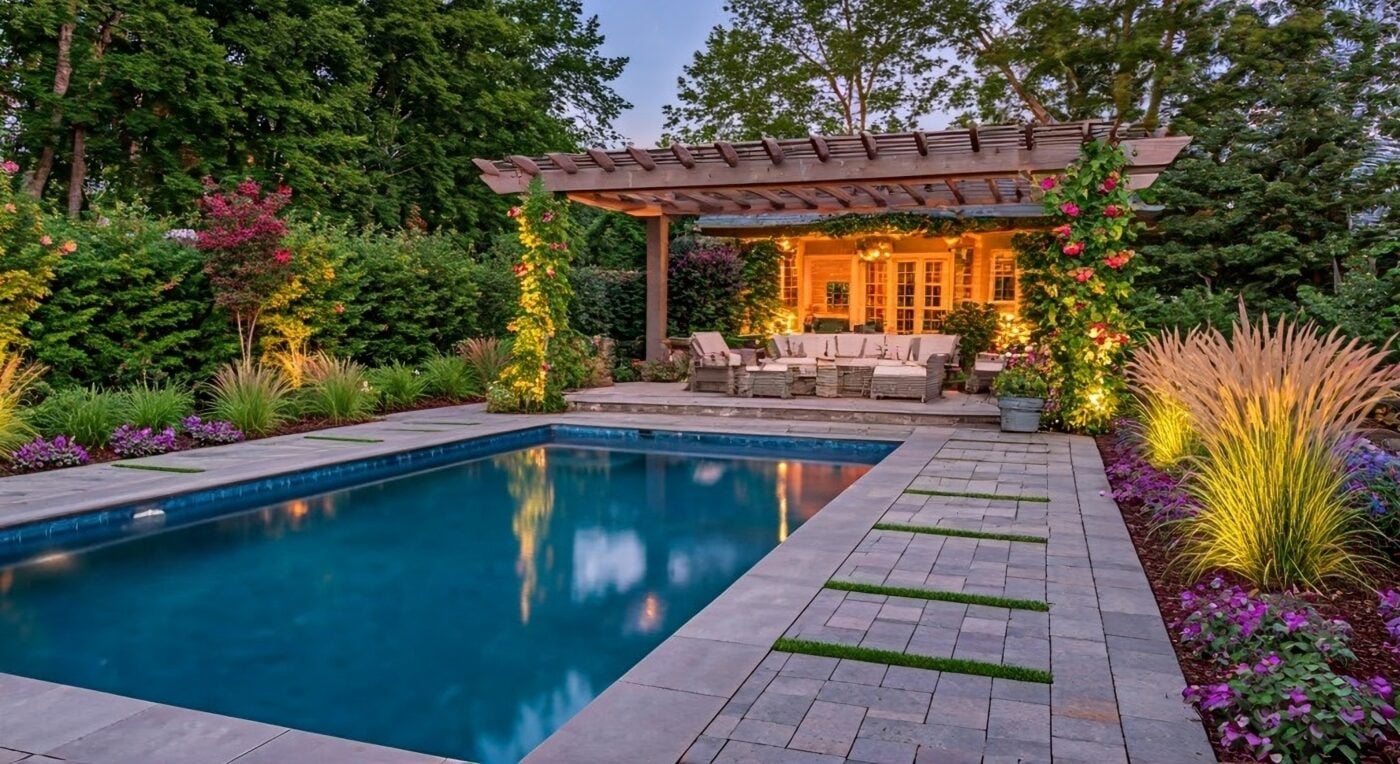
If you have searched “how much does landscaping cost” and come away more confused than when you started, you are not alone. The honest reason there is no single price tag is that “landscaping” can mean anything from spreading mulch on a Saturday to reshaping an entire property with stone terraces, native plantings, and an irrigation system. The number that matters is the one tied to your yard, your goals, and the realities of building in New England soil and weather.
This guide walks through what actually drives cost in eastern Massachusetts, gives realistic ranges by project type, and explains why homeowners who start with a thoughtful design almost always spend less over the life of their property than those who don’t. By the end you’ll be able to set a budget with confidence and ask a contractor the right questions.
What actually determines the cost of a landscaping project
Price is the sum of a handful of variables, and understanding them is the difference between a vague guess and a real budget. Here is where the money goes.
Scope and complexity
A flat lawn that needs fresh sod is a straightforward job. A sloped coastal lot that needs retaining walls, regraded beds, and a patio carved into a hillside is an engineering challenge. The more your project reshapes the land itself — rather than simply dressing it up — the more it costs, because grading, drainage, and structural hardscape carry the most labor and material.
Materials
Natural stone costs more than poured concrete. Mature specimen trees cost more than young nursery stock. Bluestone, granite, and locally quarried fieldstone — the materials that read as timeless on a New England property — sit at the higher end, but they also last for decades and rarely look dated. Lower-cost materials can be the right call for a budget, but they often need replacing sooner.
Site conditions
This is the factor homeowners most often overlook. Poor drainage, heavy clay or ledge, mature tree roots, tight access for equipment, and existing structures all add cost because they add labor. A yard that looks simple from the deck can hide thousands of dollars of site preparation beneath the surface. A proper site assessment up front is how you avoid being surprised by it later.
Labor and craftsmanship
Skilled stone masonry, precise grading, and healthy plant installation are not commodities. The crew matters. The difference between a patio that heaves after one winter and one that sits flat for twenty years is almost entirely in the base preparation you never see — and that is labor, done right, the first time.
Landscaping cost in Massachusetts by project type
The ranges below reflect typical residential work across Norfolk County, the South Shore, and greater eastern Massachusetts in 2026. Treat them as planning brackets, not quotes — every property is different, and only an on-site assessment produces a real number.
| Project | What it includes | Typical range |
|---|---|---|
| Garden bed & planting refresh | New plantings, edging, mulch, soil amendment | $3,000–$10,000 |
| Patio & walkway (hardscape) | Bluestone, pavers, or stone, with proper base prep | $12,000–$45,000 |
| Drainage & grading | Regrading, drains, swales, erosion control | $5,000–$30,000 |
| Full backyard design & install | Plan, hardscape, plantings, lighting, lawn | $40,000–$150,000+ |
| Outdoor living (kitchen, fire feature, pergola) | Structures, masonry, utilities, finishes | $25,000–$100,000+ |
| Seasonal maintenance (annual) | Spring/fall cleanups, pruning, bed care | $2,500–$12,000/yr |
A few patterns are worth naming. Hardscape almost always costs more than homeowners expect, because most of the budget is invisible — the excavation and compacted base beneath a patio matter more than the stone on top. Plantings, by contrast, often cost less than expected up front but require ongoing care to deliver on their promise. And drainage, the least glamorous line item of all, is frequently the one that protects everything else you’ve invested in.
Why a design-first approach saves money
Here is the counterintuitive truth at the center of this whole question: the cheapest way to landscape is rarely the cheapest looking path. The homeowners who overspend are usually the ones who skipped the plan.
Without a cohesive design, projects get built in disconnected pieces. A patio goes in one year, then a year later it has to be partly torn up to add the drainage that should have been planned alongside it. Beds get planted with whatever looked good at the garden center, then replaced when the plants outgrow the space or fail in conditions they were never suited to. Each fix is a small overrun, and they add up fast.
A thoughtful master plan does the opposite. It sequences the work so nothing has to be undone. It selects plants suited to your light, soil, and exposure — which, on a coastal South Shore lot, is no small thing — so they thrive instead of needing replacement. And it lets you build in phases over several years against a single coherent vision, spreading cost without sacrificing the end result. Working with a professional landscape design firm is how you get that plan. The design process is an investment that pays for itself by preventing the expensive mistakes that come from building without one.
What’s different about landscaping on the South Shore
Building in eastern Massachusetts — and especially in coastal communities like Cohasset, Hingham, Duxbury, and Marshfield — comes with conditions that influence both design and cost.
Salt exposure and coastal wind narrow the list of plants that will actually flourish, which makes plant selection a specialized decision rather than a catalog order. Our freeze-thaw winters punish hardscape that wasn’t built on a proper frost-depth base, so cutting corners on patio and wall construction is a false economy here in a way it might not be elsewhere. Drainage takes on outsized importance on flat coastal lots and in areas with high water tables. And our compressed growing season means timing matters — the right window for planting, grading, and installation is shorter than in milder climates.
None of this should discourage you. It simply means local knowledge is worth paying for. A firm that builds in these conditions every season knows which materials survive the winter, which plants thrive near the coast, and how to grade a flat lot so water moves where it should.
How to budget for your project
Once you understand the variables, setting a realistic budget becomes far easier. A few practical principles:
- Start with the plan, not the price. Get a design and a phased plan first. It turns a vague wish into a scoped project you can actually budget against.
- Budget for what you can’t see. Site prep, drainage, and base work aren’t optional extras — they’re what makes the visible work last. Plan for them.
- Phase intelligently. You don’t have to build everything at once. A good plan lets you spread the investment over two or three seasons while keeping the end result coherent.
- Invest where it lasts. Spend on the structural and permanent elements — grading, masonry, mature trees. Save on the elements that are easy to change later, like annual color.
- Factor in maintenance. A beautiful landscape is an asset only if it’s cared for. Budget for ongoing landscape maintenance from the start.
How to compare landscaping quotes
When you collect estimates, the lowest number is rarely the best value — and comparing quotes well is one of the most important skills a homeowner can bring to a project. Two quotes that look hundreds of dollars apart can describe completely different work.
The key is to compare what’s actually included, not just the bottom line. A quote that seems high may include proper site preparation, a deep compacted base, quality materials, and a real plant warranty. A lower quote may quietly omit the drainage, thin out the base, or substitute cheaper plants and stone that won’t last. Neither is wrong to offer — but you can only choose well if you can see the difference.
Ask each contractor to put their plan in writing. A clear, documented scope — what’s being installed, where, with which materials, and what’s covered if something fails — protects both sides and tells you a great deal about how a company operates. Vague quotes lead to vague outcomes and uncomfortable conversations later. Detailed, written plans are a sign of a firm that stands behind its work.
It’s also fair to ask about process. Who creates the design? How are changes handled and recorded? What does the warranty actually cover, and for how long? A firm that answers these questions clearly and documents its recommendations is one you can trust to deliver what you agreed to — and to be straight with you if conditions in the field call for a different approach.
Frequently asked questions
How much does it cost to landscape a backyard in Massachusetts?
A full backyard design and installation in Massachusetts typically costs between $40,000 and $150,000 or more. The range is wide because it depends on whether you’re adding hardscape like patios and walls, the materials chosen, site conditions such as slope and drainage, and the extent of plantings and lighting. A smaller backyard refresh focused on plantings and beds can be completed for considerably less.
Is professional landscaping worth the cost?
Yes — professional landscaping is worth the cost because it prevents expensive mistakes and increases property value. A well-designed, well-built landscape can return a significant portion of its cost in added home value, and a cohesive plan avoids the costly rework that comes from building piecemeal. The value lies as much in the planning and craftsmanship as in the finished look.
Why is hardscaping so expensive?
Hardscaping is expensive because most of the cost is in the excavation and base preparation you never see. Building a patio or wall that survives New England’s freeze-thaw cycles requires digging to frost depth and compacting a proper stone base — labor-intensive work that determines whether the finished surface stays flat for decades or heaves after a single winter.
How much should I budget for landscape maintenance?
Most homeowners should budget between $2,500 and $12,000 per year for professional landscape maintenance, depending on property size and the level of detail. Maintenance protects your initial investment — pruning, seasonal cleanups, bed care, and plant health monitoring keep a landscape looking its best and prevent small issues from becoming costly ones.
Can I do a landscaping project in phases to spread out the cost?
Yes — phasing a landscaping project over multiple seasons is one of the smartest ways to manage cost. When the work follows a single master plan, each phase builds on the last with nothing torn up or redone later. This lets you invest gradually while still arriving at a unified final result.
Ready to put a real number on your project?
Start with a design consultation:
https://landdesignassociates.com/design-build-form/
Or explore our work here:
https://landdesignassociates.com/featured-projects/