

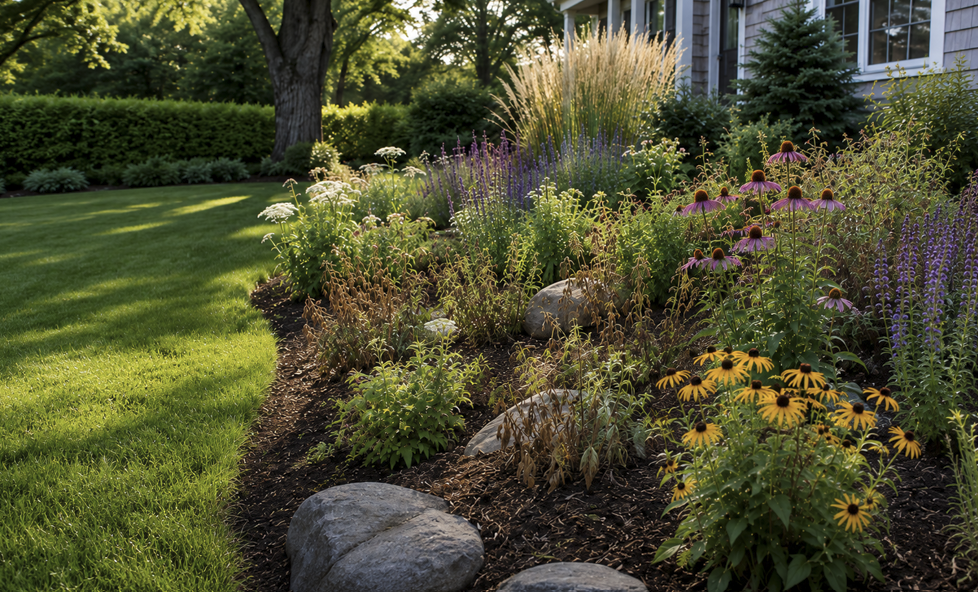
If you’ve planted a native garden in the last year or two and watched it look a little rough during a hot, dry stretch, you’re not alone. A quick scroll through gardening forums this summer shows plenty of homeowners asking the same question: is my new native yard failing, or is this just what establishment looks like?
The short answer is that young native gardens often look stressed during their first few drought cycles, and that’s normal. Understanding why helps you make smarter landscaping ideas going forward, whether you’re planning a new bed or wondering if your existing one needs help.
Why New Native Gardens Struggle in the First Dry Summer
Native plants are, by definition, well adapted to the regional climate they evolved in. But adaptation doesn’t mean instant toughness. A native perennial or shrub planted this spring hasn’t had time to develop the deep, extensive root system that makes mature native plantings so drought-resistant.
Most nursery-grown plants arrive with a compact root ball shaped by a container. Once in the ground, that plant needs one to three growing seasons to push roots down and outward into the surrounding soil. During that establishment window, the plant is essentially still relying on a container-sized root system to support a full-sized top. That mismatch is exactly why young native plantings can wilt, drop leaves, or show dieback during a harsh heat wave, even though the same species growing wild nearby looks perfectly fine.
This is one of the most important landscaping ideas for anyone new to native gardening: the first one to two years are an investment period, not a verdict on whether the design is working.
Temporary Dieback Isn’t Always a Failure
One of the most common questions during a drought stretch is whether browning leaves or a wilted stem mean a plant is dying. In many cases, what looks like failure is actually a defense mechanism.
Many native perennials and grasses will sacrifice above-ground growth to protect their root systems during extreme heat or drought stress. Coneflower, black-eyed Susan, switchgrass, and little bluestem are all known for going dormant early or showing scorched foliage in a bad drought year, only to return the following spring once conditions improve. This is different from woody shrubs and trees, where dieback on stems can sometimes indicate real damage, especially if it appears on multiple branches or persists into the following season.
The distinction matters for anyone evaluating their yard this summer: a herbaceous perennial that looks rough in August but has a healthy crown at soil level is very likely fine. A shrub with brittle, dry branches throughout is worth a closer look, and possibly a call to a landscape professional if it doesn’t leaf out normally the following spring.
Soil Resilience: The Part of the Story That’s Easy to Miss
A lot of drought advice focuses on plant selection, but soil condition plays just as large a role in how a native garden handles a dry summer. Healthy, organically rich soil holds moisture longer and supports the microbial life that helps plant roots access water and nutrients efficiently.
New construction sites and older lawns converted to garden beds often have compacted, low-organic-matter soil that drains too quickly or, in clay-heavy areas, doesn’t drain well at all. Either extreme puts extra stress on an establishing native garden.
A few practical outdoor design choices improve soil resilience over time:
- Top-dressing with compost annually, rather than tilling it in, which preserves soil structure and the fungal networks that help with drought tolerance.
- Mulching consistently with shredded leaves or bark to regulate soil temperature and slow evaporation.
- Avoiding over-amending with high-nitrogen fertilizers, which can push soft, fast top growth at the expense of root development, exactly the opposite of what a young plant needs during a drought.
- Minimizing soil disturbance around establishing plants, since undisturbed soil structure supports better water infiltration than repeatedly cultivated ground.
Soil resilience is a long game. A garden bed with genuinely healthy soil often needs less supplemental watering by year two or three, simply because the soil itself is doing more of the work.
Reducing Watering Without Losing the Garden
For homeowners trying to cut back on watering during a hot summer without watching their investment die, timing and technique matter more than volume.
Water deeply, not frequently. A once- or twice-weekly deep soak encourages roots to grow downward in search of moisture. Frequent shallow watering does the opposite, training roots to stay near the surface where they’re more vulnerable to heat and drought stress.
Water in the early morning. This reduces evaporation loss and gives foliage time to dry before evening, which also helps prevent fungal issues.
Prioritize by plant age, not species. A three-year-old native planting can usually handle a dry stretch with no intervention, while a plant installed this spring may need consistent attention through its first full season regardless of how drought-tolerant the species is rated.
Use drip irrigation or soaker hoses for new plantings rather than overhead sprinklers, which lose more water to evaporation and wind drift.
These practices reflect a broader shift in residential landscaping: the goal isn’t a garden that needs zero water ever, it’s a garden that needs dramatically less water than a traditional lawn once it’s established, and that uses the water it does get efficiently.
Choosing Cold-Hardy Plants That Also Handle Heat and Drought
New England’s climate presents an interesting challenge: plants need to survive winters that can dip well below zero and summers that increasingly bring extended dry heat. The best landscaping ideas for this region focus on species that handle both extremes well.
Some reliable choices for regional gardening in Massachusetts and greater New England include:
- Little bluestem – a cold-hardy native grass with excellent drought tolerance once established, offering strong winter interest with its copper-colored fall color.
- Black-eyed Susan – tolerant of both heat and cold, with a long bloom period that supports pollinators.
- Butterfly weed – deep-rooted and highly drought-tolerant once mature, with vivid orange summer blooms.
- New England aster – true to its name, this native handles the regional climate well and provides critical late-season nectar for pollinators.
- Switchgrass – a resilient, cold-hardy grass that adds structure and movement to a landscape while requiring minimal irrigation after establishment.
Choosing plants suited to both ends of the New England climate reduces the long-term maintenance burden considerably, which is one of the biggest advantages of native and regional plant selection over generic ornamental choices.
Outdoor Design That Works With Drought, Not Against It
Beyond individual plant choices, the way a landscape is designed can make a meaningful difference in how it handles dry conditions. A few outdoor design principles that support drought resilience:
- Grouping plants by water need, so drought-tolerant species aren’t competing with moisture-loving plants for the same irrigation zone.
- Reducing lawn area in favor of planted beds, since turf grass is often the most water-intensive part of a residential landscape.
- Incorporating hardscape elements like gravel paths or dry-laid stone, which reduce the total planted area requiring irrigation while adding structure and visual interest.
- Designing for microclimates, placing more drought-sensitive plants where they’ll get afternoon shade from a structure or mature tree, and more heat-tolerant species in fully exposed areas.
These strategies matter most in the first few years of a new landscape, when plants are least equipped to handle stress on their own.
What This Means for Your Yard
If your native garden looks stressed this summer, the most useful thing you can do is resist the urge to over-water or replace plants prematurely. Give establishing plants through at least one full growing season, focus on soil health as much as plant selection, and water deeply rather than frequently.
For homeowners planning a new native landscape or reworking an existing one, thoughtful plant selection paired with soil-focused installation practices makes an enormous difference in how the garden performs during future dry summers. A resilient, low-water landscape isn’t something you get on day one. It’s something you build over a few seasons of the right choices.
Frequently Asked Questions
How long does it take for native plants to become drought-tolerant? Most native perennials and grasses need one to three growing seasons to develop the deep root systems that make them genuinely drought-resistant. Consistent watering during the first year is important even for drought-tolerant species.
Should I cut back a native plant that looks dead during a drought? Not right away. Check for a healthy crown at soil level, and wait until the following spring before assuming a herbaceous perennial has died, since many go dormant early under heat stress.
Do native plants need less watering than regular garden plants? Once established, most native plants need significantly less supplemental water than non-native ornamentals or turf grass, because their root systems are adapted to regional rainfall patterns.
What are the best cold-hardy, drought-tolerant plants for New England? Little bluestem, black-eyed Susan, butterfly weed, New England aster, and switchgrass are all reliable choices that handle both cold winters and dry summers well.
Thinking Through Your Landscaping Ideas?
Whether you’re planning a new native bed or trying to help an existing one through a tough summer, thoughtful design and soil-first installation make the difference between a garden that struggles every year and one that gets stronger over time. If you’re weighing landscaping ideas for a more resilient, lower-maintenance yard, a professional site evaluation can help you figure out the right plant palette and soil approach for your specific property.
Start with a design consultation:
https://landdesignassociates.com/design-build-form/
Or explore our work here:
https://landdesignassociates.com/featured-projects/