

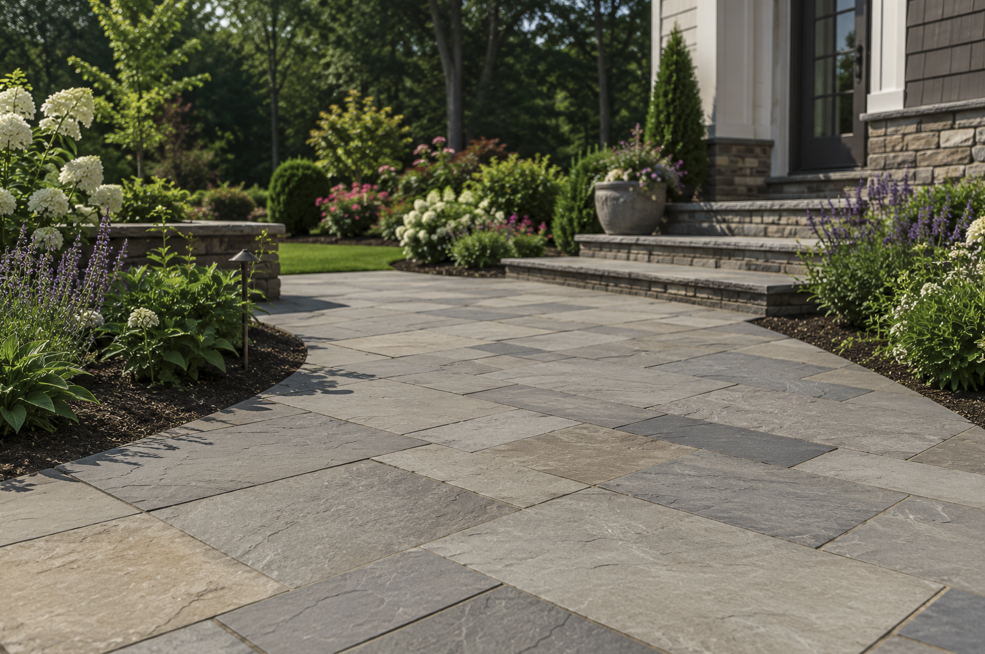
When homeowners envision a new patio, walkway, or outdoor living space, they often picture the finished product—beautiful pavers, elegant borders, comfortable seating areas, and a backyard ready for entertaining. What many don’t realize is that the longevity of that patio has very little to do with the pavers themselves and everything to do with what happens before the first stone is ever laid. At Land Design Associates, we know that a successful landscape project starts long before installation begins. Through careful landscape design, thoughtful planning and meticulous site preparation, we build outdoor spaces throughout Massachusetts that are designed to stand the test of time.
A professionally installed paver patio should provide decades of enjoyment. It should remain level, drain efficiently after heavy rains, withstand New England’s harsh freeze-thaw cycles, and continue looking as beautiful twenty years from now as it did on the day it was completed. That kind of performance isn’t achieved by chance—it comes from investing time, experience, and craftsmanship into every step beneath the surface.
Every Successful Landscape Project Starts with a Plan
Every exceptional outdoor space begins with a detailed plan. While homeowners may focus on selecting paver colors or deciding where the fire pit will go, experienced landscape professionals understand that every decision made before construction directly affects the finished result.
Before equipment ever arrives on-site, our team carefully reviews the property, existing grades, drainage patterns, utilities, surrounding structures, and how the new installation will integrate with the rest of the landscape. This planning phase allows us to identify potential challenges before they become expensive problems.
At Land Design Associates, we believe quality construction starts with listening to our clients. Understanding how a family intends to use their outdoor space helps us create patios, walkways, retaining walls, outdoor kitchens, and gathering areas that are both beautiful and functional.
Our landscape design process combines aesthetics with engineering principles to ensure every project performs as well as it looks.
Precise Layout Ensures Lasting Results
Once the design has been finalized, careful layout begins.
This is much more than simply marking where the patio will go. Our crews use detailed measurements to establish elevations, verify dimensions, determine drainage slopes, and ensure the installation aligns perfectly with existing structures such as homes, driveways, pools, gardens, and outdoor living spaces.
Even small layout errors can create significant issues later in construction.
A patio that isn’t properly aligned may direct water toward your home’s foundation, interfere with existing drainage systems, or appear visually disconnected from the surrounding landscape.
Taking extra time during layout helps eliminate these issues before excavation even begins.
Utility Locating Protects Everyone
One of the most important—and often overlooked—steps in landscape construction is locating underground utilities.
Massachusetts homes contain a network of buried infrastructure that homeowners rarely think about. Electrical service, natural gas lines, water service, sewer lines, irrigation systems, internet cables, and communication utilities may all exist beneath your lawn.
Before any excavation begins, utilities are professionally located and clearly marked.
This process protects:
- Homeowners
- Construction crews
- Utility providers
- Existing landscape features
- The overall project schedule
Accidentally striking an underground utility can delay construction, create dangerous working conditions, and result in costly repairs. Proper utility locating is one of the simplest yet most important investments in a successful project.
Excavation Is the Foundation of Longevity
When many people hear the word excavation, they imagine digging a hole.
Professional excavation is far more involved.
Excavation determines how stable the finished patio will remain for decades to come.
Every property is different. Soil composition varies throughout Massachusetts. Some homes sit on sandy soils while others contain dense clay, ledge, organic material, or poorly compacted fill left behind during previous construction.
Our crews remove unstable material until reaching soil capable of supporting the new installation.
Factors that determine excavation depth include:
- Existing soil conditions
- Intended use of the patio
- Vehicle or pedestrian traffic
- Drainage requirements
- Frost depth
- Existing site elevations
- New England freeze-thaw cycles
Proper excavation prevents one of the most common homeowner complaints: patios that settle unevenly after only a few winters.
Shortcuts during excavation often remain hidden for several years before the damage becomes visible.
Unfortunately, by then, repairs can be far more expensive than doing the work correctly the first time.
Understanding Massachusetts Soil Conditions
Massachusetts presents unique challenges for hardscape construction.
Our region experiences significant seasonal temperature changes, abundant rainfall, snow accumulation, spring thaw, and repeated freeze-thaw cycles that constantly stress landscape installations.
Different soil types respond differently to moisture.
Clay expands.
Sand drains quickly.
Organic soils compress.
Fill material can settle unpredictably.
Understanding these conditions allows experienced contractors to adjust excavation depths, drainage systems, and base construction accordingly.
This local knowledge is one of the advantages of working with a contractor experienced in Massachusetts landscape construction.
Grading Is More Than Making the Ground Level
One of the biggest misconceptions homeowners have is that grading simply means creating a flat surface.
Professional grading actually means controlling how water moves across your property.
Water should always move away from structures—not toward them.
Improper grading can contribute to:
- Basement moisture
- Standing water
- Erosion
- Ice accumulation
- Foundation problems
- Premature patio failure
- Landscape damage
Every patio installed by Land Design Associates is carefully graded to ensure proper drainage while maintaining an attractive appearance.
Small changes in elevation often make enormous differences in long-term performance.
Drainage Protects Your Investment
Drainage is one of the least visible yet most valuable parts of any landscape installation.
Many drainage systems disappear completely once construction has been completed.
Out of sight does not mean unimportant.
Without proper drainage, water can accumulate beneath the patio base, causing frost heaving, settling, erosion, and structural movement over time.
Depending on site conditions, drainage improvements may include:
- Perforated drainage pipe
- Catch basins
- Dry wells
- Gravel drainage systems
- Surface swales
- Positive grading
- Water collection systems
- Stormwater management solutions
Each property is unique, and no two drainage plans are exactly alike.
Our goal is always the same: move water safely away from your investment while protecting both the patio and your home’s foundation.
Base Preparation: The Hidden Structure Beneath Every Patio
Homeowners naturally admire the finished pavers because they are the visible part of the project.
However, the true strength of every patio lies beneath them.
The base acts as the structural foundation supporting everything above it.
Without a properly prepared base, even premium pavers can fail.
Our base preparation process includes careful installation of crushed aggregate in multiple lifts, allowing each layer to be properly leveled and compacted before additional material is added.
This layered approach creates exceptional strength and stability while minimizing future movement.
Proper base preparation includes:
- Engineered aggregate
- Correct material depth
- Moisture control
- Precise grading
- Layered installation
- Mechanical compaction
- Final leveling
Every step contributes to a finished patio capable of performing for decades.
Compaction: The Step That Locks Everything Together
If there is one step that separates a professionally built patio from one that begins to fail after only a few seasons, it is proper compaction.
Compaction may not be visible once the project is complete, but it plays a critical role in the overall stability and longevity of your hardscape. Every layer of aggregate that is installed must be mechanically compacted before the next layer is added. This process removes air pockets, increases the density of the material, and creates a stable foundation capable of supporting the finished patio for many years.
Without proper compaction, the base can settle unevenly over time. As the ground shifts, so do the pavers above it. The result can be uneven walking surfaces, trip hazards, standing water, and costly repairs that could have been avoided.
At Land Design Associates, we never rush this stage of construction. Taking the extra time to compact each layer properly ensures that the finished installation performs exactly as it was designed to, even after years of exposure to Massachusetts weather.
Setting the Bedding Layer
Once the structural base has been completed, a precisely screeded bedding layer is installed.
This thin layer provides the perfectly level surface that allows each paver to sit securely while maintaining the proper elevation and slope. Although the bedding layer is much thinner than the structural base beneath it, it is essential for achieving a uniform appearance and proper drainage across the entire patio.
Every detail matters. Even slight inconsistencies at this stage can affect the finished appearance, which is why experienced installers take their time to ensure the surface is perfectly prepared before the first paver is placed.
Finally, the First Paver Is Installed
After all of the planning, excavation, grading, drainage installation, base preparation, and compaction have been completed, the moment finally arrives to begin laying pavers.
While this is the stage most homeowners associate with patio construction, it represents only a portion of the overall project.
Each paver is carefully installed according to the approved pattern, maintaining consistent joint spacing and alignment throughout the installation. Whether the project features a traditional running bond, herringbone pattern, random layout, or custom design, precision is essential.
Once the field pavers are installed, edge restraints are secured to prevent movement over time. Polymeric joint sand is then swept into the joints and activated, helping to lock the entire surface together while discouraging weed growth and insect activity.
The result is a finished patio that is both beautiful and structurally sound.
Why New England Weather Demands Superior Installation Practices
Massachusetts presents unique challenges that homeowners in warmer climates rarely experience.
Every winter, patios are subjected to freezing temperatures, snow accumulation, ice, and repeated freeze-thaw cycles. During spring, melting snow and seasonal rains introduce additional moisture into the ground.
Without proper drainage, excavation, and base preparation, this cycle of freezing and thawing can gradually shift the soil beneath a patio. Over time, this movement may lead to uneven surfaces, separated joints, and drainage problems.
That is why construction techniques that work in other parts of the country are not always suitable for New England.
At Land Design Associates, every project is designed and constructed with Massachusetts’ climate in mind. By understanding local soil conditions, drainage requirements, and seasonal weather patterns, we build outdoor living spaces that are prepared to withstand the challenges of every season.
The Difference Between Price and Value
One of the most common questions homeowners ask is why estimates for the same patio can vary so dramatically.
The answer usually isn’t the pavers.
It is everything underneath them.
Some contractors reduce costs by minimizing excavation depth, installing less aggregate, skipping drainage improvements, or reducing the amount of time spent compacting the base. These shortcuts often remain hidden until years later when settling, shifting, or drainage problems begin to appear.
A lower estimate may save money initially, but it can lead to expensive repairs, complete patio replacement, or ongoing maintenance costs.
A professionally built patio is an investment in your property. Choosing quality construction from the beginning provides lasting value, improved safety, better drainage, and greater peace of mind.
Building Outdoor Spaces That Last
Every successful landscape project is the result of hundreds of decisions made before the first paver is ever installed.
From the initial consultation and landscape design through excavation, grading, drainage, base preparation, and final installation, every step contributes to the finished product.
That commitment to craftsmanship is what separates a patio that lasts five years from one that continues performing beautifully for thirty years or more.
At Land Design Associates, we believe every outdoor living space should be built with the same level of care beneath the surface as it receives above it. Our experienced team combines thoughtful design, quality materials, proven construction methods, and attention to detail to create patios, walkways, retaining walls, and complete outdoor environments that homeowners can enjoy for generations.
Whether you’re planning a new patio, an outdoor kitchen, a retaining wall, or a complete property transformation, investing in proper preparation today ensures the longevity and performance of your landscape tomorrow.
Because when the last paver is installed, the most important work has already been done.
Ready to put a real number on your project?
Start with a design consultation:
https://landdesignassociates.com/design-build-form/
Or explore our work here:
https://landdesignassociates.com/featured-projects/