

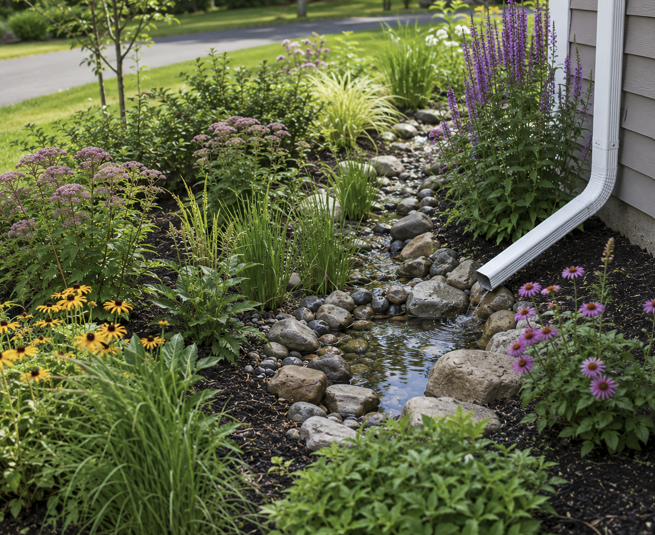
Rain gardens are one of the most effective ways to manage stormwater runoff while adding natural beauty to your property. A well-designed rain garden captures rainwater from roofs, driveways, and lawns, allowing it to soak into the ground instead of pooling near your foundation or running off into storm drains. For homeowners in Walpole, MA and across Norfolk County, rain garden design has become a popular solution for wet yards, erosion problems, and eco-friendly landscaping goals.
At Land Design Associates, we’ve helped homeowners throughout Walpole, Westwood, and the surrounding Massachusetts communities turn soggy, hard-to-mow corners of their yards into thriving, low-maintenance landscape features. This guide covers everything you need to know about planning, planting, and maintaining a rain garden in a New England climate.
What Is a Rain Garden?
A rain garden is a shallow, planted depression designed to collect and absorb rainwater runoff from impervious surfaces like roofs, patios, and driveways. Unlike a pond, a rain garden isn’t meant to hold standing water permanently — it’s engineered to drain within 24 to 48 hours after a storm, which prevents mosquito breeding while still filtering pollutants and recharging groundwater.
Rain gardens rely on native, water-tolerant plants with deep root systems that help water infiltrate the soil quickly. The result is a landscape feature that looks like a garden bed most of the time, but functions as a natural stormwater management system during and after rain events.
Why Rain Gardens Make Sense for Massachusetts Properties
Norfolk County’s mix of clay-heavy soils, seasonal downpours, and older residential drainage systems make rain gardens a particularly practical choice for local homeowners. A few key benefits:
- Reduced flooding and erosion. Rain gardens intercept runoff before it reaches your foundation, driveway, or neighboring properties, reducing the risk of basement seepage and soil erosion.
- Improved water quality. Native plants and engineered soil layers filter out fertilizers, oils, and sediment before water reaches local streams and the Neponset River watershed.
- Lower maintenance than traditional lawn. Once established, native rain garden plantings need far less watering, mowing, and fertilizing than turf grass.
- Habitat for pollinators. Native perennials attract bees, butterflies, and birds, supporting local biodiversity.
- Increased curb appeal. A thoughtfully designed rain garden adds texture, color, and seasonal interest that a plain drainage swale never could.
Planning Your Rain Garden: Site Selection
The success of a rain garden depends heavily on where it’s placed. When our design team evaluates a property in Walpole or the surrounding area, we look at a few critical factors:
Distance from the house. A rain garden should sit at least 10 feet from your foundation to avoid directing water toward the basement. Downspouts can be extended with underground piping to carry water to the garden if the natural drainage path isn’t far enough away.
Natural low points. Look for areas where water already collects after a storm — these low spots are often ideal starting points, though they sometimes need soil amendments to drain properly.
Slope. A gentle slope of 1% to 12% works best. Flatter areas may need to be excavated into a shallow basin, while steeper slopes require a berm on the downhill side to hold water in place.
Sun exposure. Most rain garden plants prefer full to partial sun, so avoid deeply shaded areas unless you’re selecting a shade-tolerant native plant palette.
Soil type. Massachusetts soils vary widely by neighborhood — some areas have fast-draining sandy loam, while others have dense clay that holds water too long. A percolation test (digging a hole and timing how fast water drains) tells us whether soil amendments are needed before planting.
Sizing and Shaping a Rain Garden
A properly sized rain garden should be able to handle the runoff from the drainage area feeding into it — typically the roof section, patio, or lawn area draining toward that spot. As a general rule of thumb, the rain garden’s surface area should be roughly 20% to 30% of the impervious surface area it’s collecting water from, though this varies based on soil infiltration rate and depth of the basin.
Most residential rain gardens range from 100 to 300 square feet, with a basin depth of 4 to 8 inches. Kidney or crescent shapes tend to blend more naturally into a landscape than rigid rectangles, and a slightly irregular border helps the garden read as an intentional design feature rather than a drainage ditch.
Choosing the Right Plants for a New England Rain Garden
Plant selection is where a rain garden goes from purely functional to genuinely beautiful. The best designs use a mix of native plants suited to three different moisture zones within the garden:
Zone 1 – The basin (wettest area): Plants here need to tolerate standing water for short periods. Strong native choices include blue flag iris, swamp milkweed, joe-pye weed, and soft rush.
Zone 2 – The slope (moderately moist): This transition zone works well with New England aster, black-eyed Susan, cardinal flower, and switchgrass.
Zone 3 – The edge (driest area): Little bluestem, butterfly weed, and coneflower thrive here, tolerating both moisture and dry spells.
Choosing native species isn’t just an aesthetic preference — native plants have evolved deep, fibrous root systems that dramatically improve water infiltration compared to shallow-rooted turf grass or non-native ornamentals. They’re also naturally adapted to Massachusetts winters, meaning less replanting and less maintenance year after year.
Common Rain Garden Mistakes We See
After years of designing landscapes across Norfolk County, a few recurring issues come up when homeowners attempt a DIY rain garden without a proper design plan:
- Placing it too close to the foundation, which can actually worsen basement moisture problems instead of solving them.
- Underestimating drainage area, resulting in a garden that overflows during heavy storms.
- Skipping the soil test, leading to standing water that lingers for days and attracts mosquitoes.
- Choosing non-native or ornamental plants that can’t handle the wet-to-dry cycle a rain garden goes through.
- Forgetting an overflow path for the rare storm that exceeds the garden’s capacity — every rain garden needs a designated spot for excess water to exit safely.
Maintenance: What to Expect After Installation
A well-designed rain garden is genuinely low-maintenance once established, but the first one to two growing seasons require some attention:
- Weeding regularly while native plants establish their root systems and begin to outcompete weeds naturally.
- Watering during dry spells in year one, since even drought-tolerant natives need consistent moisture to get established.
- Mulching with shredded hardwood mulch to suppress weeds and regulate soil temperature.
- Removing sediment or debris near the inlet a few times a year, especially after major storms.
- Cutting back perennials in late fall or early spring, leaving some seed heads through winter for birds and pollinator habitat.
After the establishment period, most rain gardens need only seasonal cleanup — far less work than maintaining an equivalent area of lawn.
Is a Rain Garden Right for Your Walpole Property?
Rain gardens work best for homeowners dealing with drainage issues, erosion, or simply looking to reduce lawn area in favor of a lower-maintenance, wildlife-friendly landscape. They’re not a fit for every yard — properties with very poor drainage, high water tables, or space constraints may need a different stormwater solution, such as a dry well or French drain, sometimes used in combination with a rain garden.
A site visit is the best way to know for sure. Our design team evaluates drainage patterns, soil composition, and sun exposure before recommending whether a rain garden — or a complementary drainage solution — makes the most sense for your property.
Frequently Asked Questions
How much does a rain garden cost to install in Massachusetts? Costs vary based on size, soil conditions, and plant selection, but most residential rain gardens range from a few thousand dollars for a small DIY-assisted project to significantly more for a fully designed and professionally installed garden with grading, soil amendment, and mature native plantings.
Do rain gardens attract mosquitoes? No, not when properly designed. A rain garden is engineered to drain within 24 to 48 hours, which is faster than the mosquito breeding cycle. Standing water problems usually indicate a garden that’s undersized or poorly graded.
Can I build a rain garden myself, or do I need a professional? Small rain gardens can be a DIY project, but proper sizing, grading, and soil testing make a significant difference in long-term performance. A professional design ensures the garden actually manages the intended drainage area instead of becoming a maintenance headache.
What is the best time of year to install a rain garden in New England? Spring and fall are ideal for installation, giving native plants time to establish root systems before the stress of summer heat or winter freeze.
Ready to Start Your Rain Garden Project?
Land Design Associates designs custom rain gardens and stormwater-friendly landscapes for homeowners throughout Walpole, Westwood, and the greater Norfolk County area. If you’re dealing with a soggy yard, erosion, or simply want a beautiful, sustainable alternative to traditional lawn, contact our team for a site consultation.
Start with a design consultation:
https://landdesignassociates.com/design-build-form/
Or explore our work here:
https://landdesignassociates.com/featured-projects/