

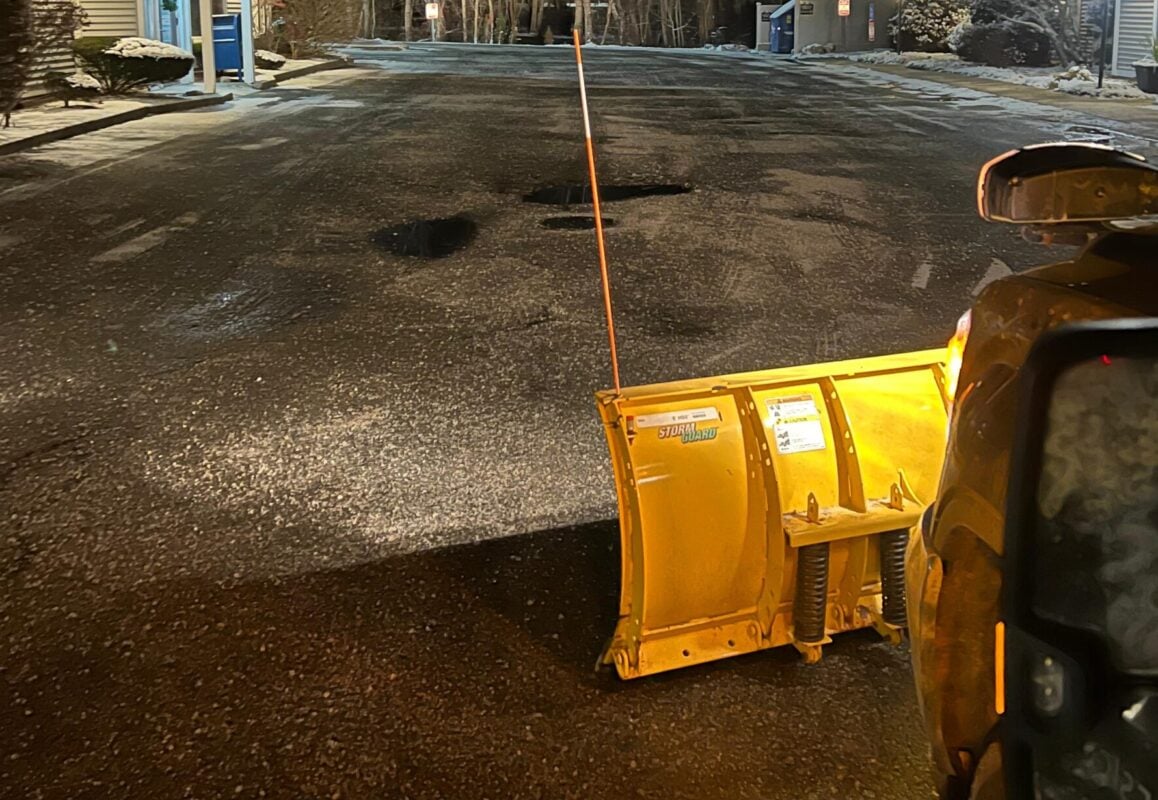
Commercial snow and ice management cost in Massachusetts typically runs $3,000–$12,000 per season for a small commercial lot (under 1 acre), scaling to $15,000–$50,000+ per season for multi-acre retail centers, corporate campuses, or HOA common areas with extensive walkways and parking. For commercial property, the number that matters most isn’t the seasonal total — it’s the liability exposure per storm event, since slip-and-fall claims on commercial property carry materially higher legal and insurance stakes than residential claims, and that risk profile drives most of what separates a cheap bid from a defensible contract.
What Drives Commercial Snow and Ice Management Costs in Massachusetts
Commercial pricing is built around three variables that residential contracts barely touch: square footage of pavement (parking lots and walkways, not just a driveway), response-time SLA commitments, and documentation requirements for liability defense. A property manager isn’t just buying plowing — they’re buying a paper trail that shows reasonable care was taken if a slip-and-fall claim is ever filed, and that documentation (time-stamped service logs, salt application records, photos) is priced into every serious commercial bid.
Massachusetts commercial properties also carry town-specific obligations that residential contracts don’t: many municipalities require cleared fire lanes and ADA-compliant accessible routes within a fixed window after snowfall ends, and failure to meet that window can expose the property owner — not just the contractor — to fines.
Commercial Snow and Ice Management Cost by Property Type
| Property Type | Price Range (per season) | Notes |
|---|---|---|
| Small retail/office lot (under 1 acre) | $3,000–$12,000 | Parking lot plow, walkway shovel, basic ice management |
| Mid-size commercial (1–5 acres) | $12,000–$30,000 | Multiple lot sections, loading docks, ADA route priority |
| Large campus/retail center (5+ acres) | $30,000–$50,000+ | Multi-crew coverage, guaranteed response SLA, full documentation |
| HOA/condo association common areas | $8,000–$25,000 | Shared walkways, multiple building entries, resident liability concerns |
Per-acre pricing for commercial lots generally runs $2,500–$6,000 per acre per season, with the higher end reflecting tighter SLA windows (2-hour response) versus standard next-morning service.
Snow Removal vs. Ice Management: Why Commercial Contracts Separate Them
Nearly every serious commercial contract in Massachusetts prices plowing and ice management as distinct line items, because insurers and property managers need to show ice treatment was applied independently of snow depth triggers — a lot can look clear of snow and still be a documented liability if it wasn’t salted or brined. Expect ice management billed at $150–$500 per application for commercial lots depending on square footage, either bundled into a seasonal rate or itemized per event for audit purposes.
SLA Terms That Change the Price
Commercial snow contracts live and die on their service level agreement language, and each of these terms moves price meaningfully:
- Trigger depth: most commercial contracts trigger at 1″–2″, tighter than typical residential 2″–3″ triggers, because commercial liability tolerance for accumulated snow is lower.
- Response window: a 2-hour guaranteed response after trigger costs materially more than a “same business day” standard — often 20–30% more for tight SLA windows during multi-property storm events when crews are stretched thin.
- Priority tier: contractors typically service larger, higher-liability accounts first during a storm; smaller lots on standard-tier contracts may wait longer during a major event, which should be disclosed in the contract, not discovered during one.
- Documentation package: photo/time-stamp logging for every service visit is now standard in most serious commercial bids in Massachusetts — treat a bid without it as incomplete, not as a discount.
What Massachusetts Conditions Add to Commercial Costs
Freeze-thaw and black ice liability. Massachusetts’ freeze-thaw cycling makes black ice the highest-frequency slip-and-fall risk on commercial property, not accumulated snow — which is why ice management frequency, not plow frequency, is often the bigger line item on a well-built contract.
ADA and fire lane compliance windows. Many Massachusetts municipalities require accessible routes and fire lanes cleared within a specific post-storm window; missing that window creates direct fine exposure to the property owner in addition to any slip-and-fall risk.
Chloride/runoff restrictions near wetlands. Commercial properties near reservoirs or wetlands may face salt application limits under local bylaws, pushing contractors toward more expensive calcium magnesium acetate or manual application methods that raise per-visit labor cost.
Multi-property routing during major storms. Contractors managing multiple commercial accounts across a region must prioritize during large storms — properties on standard-tier contracts should confirm in writing where they fall in that priority order before signing, not assume they’re first.
Choosing a Commercial Snow and Ice Management Contractor
Before signing, a property manager should confirm:
- What is the written trigger depth, and does it meet local ADA/fire lane compliance windows?
- Is there a documented, photo-logged service record provided after each visit for liability defense?
- What is the guaranteed response window, and where does this property sit in priority tier during a multi-site storm?
- Does the contractor carry commercial general liability coverage specific to snow/ice services, with limits appropriate to the property’s foot traffic — request the certificate directly.
A bid that’s meaningfully cheaper than others in this range is usually missing one of these four things — most often the documentation package or a real SLA, both of which matter more than price if a claim is ever filed.
Frequently Asked Questions
How much does commercial snow and ice management cost in Massachusetts? Small commercial lots typically run $3,000–$12,000 per season; mid-size properties run $12,000–$30,000; large campuses and retail centers can exceed $50,000 depending on acreage and SLA requirements.
What should be included in a commercial snow removal contract? A defensible contract should specify trigger depth, guaranteed response window, priority tier during major storms, ice management terms, and documented service logging for liability purposes — not just a plowing schedule.
Why is commercial snow and ice management more expensive per acre than residential? Tighter trigger depths, SLA response guarantees, ADA/fire lane compliance requirements, and liability documentation all add cost that residential contracts don’t carry.
Is ice management included in commercial snow plowing contracts? Usually billed separately or itemized within the seasonal rate — confirm this explicitly, since undocumented ice management is one of the most common liability gaps on commercial property.
Final Thought
For commercial properties in Massachusetts, snow and ice management cost is inseparable from liability management — the cheapest bid on paper is often the one missing the SLA terms and documentation that actually protect the property owner when a claim is filed. Budgeting for a defensible contract, not just a plowed lot, is what separates commercial-grade service from a residential-style bid scaled up in price alone.
Start with a design consultation:
https://landdesignassociates.com/design-build-form/
Or explore our work here:
https://landdesignassociates.com/featured-projects/