

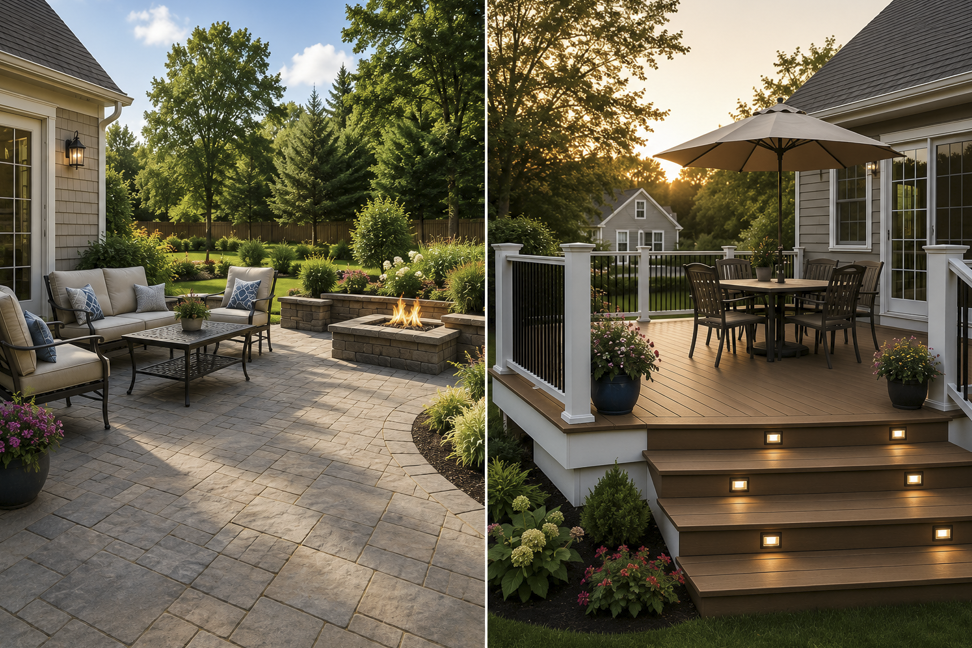
If you’re planning to enhance your outdoor living space, one of the biggest decisions you’ll face is whether to build a deck or a patio. Both features add functionality, increase curb appeal, and create inviting spaces for entertaining family and friends. However, when it comes to long-term home value in Massachusetts, the right choice depends on more than aesthetics alone. Climate, maintenance, durability, property layout, and construction quality all play important roles in determining which investment will provide the greatest return.
At Land Design Associates, we help homeowners throughout Massachusetts create outdoor spaces that are beautiful, functional, and built to last. Through thoughtful landscape design and expert landscape architecture, our team develops custom outdoor living environments that complement each home’s architecture while maximizing usability and property value. Whether you’re considering a custom patio, a raised deck, or a combination of both, understanding the advantages of each option will help you make an informed investment.
Why Outdoor Living Adds Value
Today’s homebuyers expect more than a beautiful house—they want an outdoor space that feels like an extension of the home. Functional outdoor living areas have become one of the most desirable features in residential real estate, particularly in Massachusetts where homeowners enjoy spending spring, summer, and fall outside.
A professionally designed outdoor space can provide:
- Additional entertaining space
- Improved curb appeal
- Better functionality
- Increased resale value
- Enhanced lifestyle
- Greater enjoyment of the property
The key is selecting features that suit your home, your property, and your long-term goals.
Understanding the Difference Between a Patio and a Deck
Although both serve similar purposes, patios and decks are constructed very differently.
A patio is built directly on the ground using materials such as natural stone, bluestone, concrete pavers, brick, or poured concrete. Because it rests on a properly prepared base, it becomes an integrated part of the landscape.
A deck, on the other hand, is an elevated structure supported by footings, framing, and decking materials such as pressure-treated lumber, composite boards, cedar, or hardwoods. Decks are often ideal for homes with elevated first floors or steep grades.
Understanding these structural differences is the first step in deciding which option offers the greatest value for your property.
Massachusetts Climate Matters
Massachusetts weather creates unique challenges for outdoor structures.
Cold winters, heavy snow, spring rains, humidity, and freeze-thaw cycles all affect the longevity of outdoor materials.
Patios built on properly compacted bases generally perform exceptionally well when designed with proper drainage and grading.
Decks must withstand moisture, snow loads, seasonal expansion, and prolonged exposure to the elements. While modern composite decking has significantly reduced maintenance requirements, the structural framing still requires careful design and quality construction.
Choosing the right solution means considering how New England’s climate will affect your investment over the next twenty years—not just the first few seasons.
Which Option Offers Better Return on Investment?
Both patios and decks can improve resale value, but their return often depends on the home’s architecture and the quality of the installation.
In many Massachusetts neighborhoods, professionally installed patios provide excellent long-term value because they:
- Require relatively little maintenance
- Have a long lifespan
- Blend naturally into the surrounding landscape
- Create flexible outdoor entertaining spaces
- Appeal to a broad range of buyers
Decks also provide excellent value, particularly for homes where the main living area is elevated above grade.
For many properties, the best solution isn’t choosing one over the other—it’s designing them to work together.
Maintenance Considerations
Maintenance plays a significant role in long-term value.
Patio Maintenance
Natural stone and concrete paver patios generally require:
- Occasional joint sand replacement
- Seasonal cleaning
- Minor weed control
- Periodic sealing, depending on the material
Overall, maintenance costs tend to remain relatively low.
Deck Maintenance
Traditional wood decks require:
- Staining
- Painting
- Cleaning
- Board replacement
- Structural inspections
- Fastener maintenance
Composite decking reduces many of these maintenance tasks but still requires periodic cleaning and inspection of the supporting structure.
For homeowners seeking a low-maintenance outdoor space, patios often have an advantage.
Durability in New England
Durability is one of the strongest arguments for investing in a professionally constructed patio.
High-quality pavers and natural stone can last for decades when installed over an engineered base with proper drainage.
A well-built deck also offers excellent longevity, particularly when constructed with premium composite materials and quality framing.
Regardless of the material, professional installation is essential. Poor construction practices can significantly shorten the lifespan of either option.
Design Flexibility
One advantage of patios is their design versatility.
Patios can incorporate:
- Curved edges
- Seat walls
- Fire features
- Outdoor kitchens
- Water features
- Landscape lighting
- Garden beds
- Pergolas
- Pavilions
Because patios integrate directly with the surrounding landscape, they often feel like a natural extension of the property.
Decks provide flexibility as well, particularly on sloped lots.
Features may include:
- Multiple levels
- Built-in seating
- Cable railings
- Integrated lighting
- Covered structures
- Outdoor dining areas
The ideal design depends on the home’s architecture and how the family plans to use the space.
Property Topography
Your property’s slope often determines the best solution.
Flat Properties
Homes with relatively level backyards are often excellent candidates for patios.
Minimal grading reduces construction costs while allowing for seamless transitions between the home and outdoor living areas.
Sloped Properties
Steeper sites frequently benefit from decks because elevated structures can accommodate grade changes without extensive excavation.
However, many Massachusetts properties benefit from combining retaining walls, terraces, and patios to create multiple functional outdoor rooms.
Home Architecture
Outdoor spaces should complement—not compete with—the home’s architectural style.
Traditional New England homes often pair beautifully with bluestone patios, natural stone walls, and classic plantings.
Modern homes may benefit from clean-lined paver patios or contemporary composite decks with minimalist railings.
The goal is to create harmony between the house and the landscape.
Buyer Preferences Continue to Evolve
Today’s buyers increasingly prioritize outdoor living.
Features that attract attention include:
- Outdoor kitchens
- Fire pits
- Comfortable seating areas
- Landscape lighting
- Privacy plantings
- Covered gathering spaces
Whether these amenities are incorporated into a patio or a deck, thoughtful planning greatly increases perceived value.
The Importance of Landscape Design
The outdoor surface itself is only one component of a successful project.
Professional landscape design ensures that patios, decks, walkways, planting beds, lighting, drainage, and outdoor amenities function together as one cohesive environment.
Without an overall plan, homeowners often end up with disconnected spaces that feel unfinished.
A comprehensive design creates natural circulation, balances open and planted areas, and enhances the beauty of the home from every angle.
The Role of Landscape Architecture
While landscape design focuses on aesthetics and functionality, landscape architecture addresses the technical aspects of outdoor construction.
Site grading, drainage, retaining walls, accessibility, stormwater management, and construction details all contribute to a successful project.
These behind-the-scenes elements protect your investment while ensuring the finished landscape performs well through Massachusetts’ challenging climate.
When a Combination Is the Best Investment
Many of today’s luxury homes feature both a deck and a patio.
For example:
A raised deck may provide convenient access from the kitchen for grilling and outdoor dining.
Below, a spacious stone patio can create a separate entertaining area complete with a fire feature, outdoor kitchen, and comfortable seating.
Connecting these spaces with attractive walkways, lighting, and carefully selected plantings creates a layered outdoor environment that adds both beauty and functionality.
This integrated approach often delivers the greatest long-term value because it maximizes usable outdoor space while accommodating the property’s natural topography.
Why Professional Installation Matters
Regardless of whether you choose a patio or a deck, construction quality directly affects long-term performance.
Proper site preparation, drainage planning, material selection, and expert craftsmanship ensure your investment withstands decades of New England weather.
At Land Design Associates, every project begins with a detailed site evaluation and a customized design tailored to the property and the homeowner’s goals. Our experienced team coordinates every aspect of the project, from grading and hardscape installation to planting, lighting, and finishing details.
Final Thoughts
Choosing between a patio and a deck isn’t simply about selecting a construction material—it’s about creating an outdoor living space that enhances your home, complements your lifestyle, and adds lasting value.
For many Massachusetts homeowners, a professionally designed patio offers exceptional durability, lower maintenance, and seamless integration with the surrounding landscape. Others may find that a deck is the ideal solution for their property’s elevation and architecture. In many cases, combining both creates the ultimate outdoor living experience.
By investing in expert planning, quality materials, and professional installation, you’ll enjoy an outdoor space that increases your home’s appeal today while delivering lasting value for years to come. At Land Design Associates, we’re committed to designing and building outdoor environments that reflect your vision and stand the test of time.
Start with a design consultation:
https://landdesignassociates.com/design-build-form/
Or explore our work here:
https://landdesignassociates.com/featured-projects/