

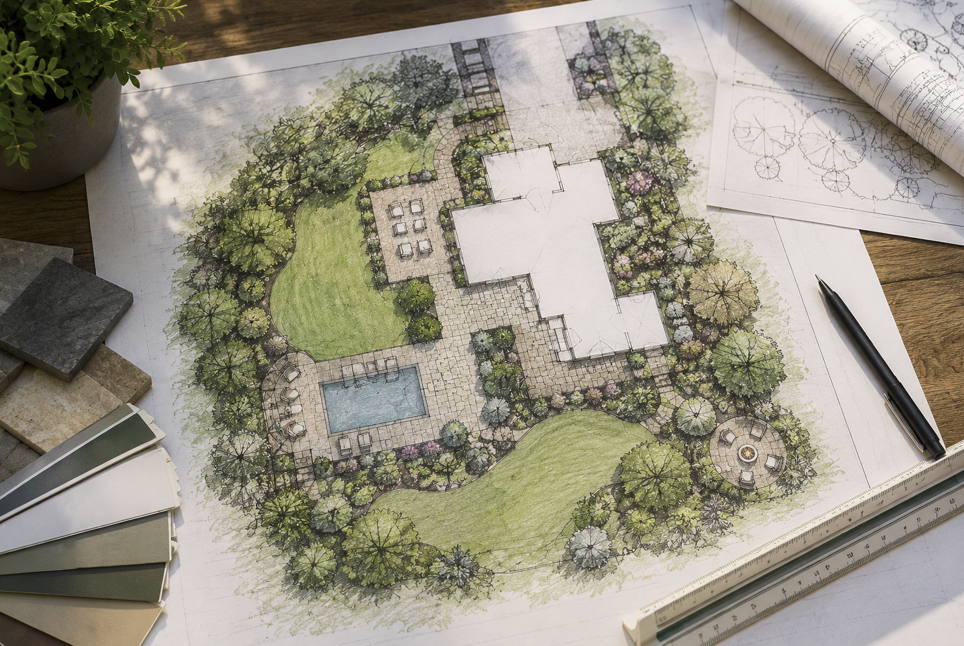
A landscape master plan is the foundation of a successful outdoor renovation, providing homeowners with a complete vision for how their property can be transformed over time. In New England, where properties often include mature trees, changing elevations, historic architecture, challenging drainage conditions, and seasonal weather extremes, a thoughtful plan is essential for creating an outdoor space that is both beautiful and functional.
At Land Design Associates in Massachusetts, we believe the best landscapes begin with careful planning before construction begins. Through professional landscape design and landscape architecture, our team evaluates each property’s unique characteristics to create outdoor environments that enhance the home, improve functionality, and provide lasting value.
A landscape master plan is much more than a drawing showing where plants and patios should go. It is a comprehensive roadmap that considers how every element of the property works together—from outdoor living areas and planting design to grading, drainage, lighting, and future improvements.
For homeowners throughout Massachusetts and New England, understanding what a landscape master plan includes can help make the design and construction process smoother, more predictable, and more successful.
Why New England Properties Benefit From a Landscape Master Plan
Every property has unique opportunities and challenges.
New England landscapes often present conditions that require careful planning, including:
- Sloped terrain
- Stone outcroppings
- Mature trees
- Wet areas
- Poor drainage
- Limited outdoor space
- Historic home styles
- Changing seasonal conditions
Without a comprehensive plan, outdoor projects can become a collection of disconnected improvements rather than a cohesive landscape.
A landscape master plan ensures that each feature supports the overall vision for the property.
For example, a homeowner may eventually want:
- A patio
- Outdoor kitchen
- Pool
- Fire pit
- Pavilion
- Walkways
- Privacy plantings
- Landscape lighting
- Garden areas
A master plan allows these elements to be considered together, even if construction happens in phases.
What Is a Landscape Master Plan?
A landscape master plan is a detailed design document that illustrates how an entire property can be developed or improved.
It typically includes:
- Existing conditions analysis
- Proposed site improvements
- Outdoor living spaces
- Planting concepts
- Hardscape layouts
- Grading considerations
- Drainage solutions
- Lighting concepts
- Construction phases
- Material recommendations
The goal is to create a complete vision while allowing flexibility for future changes.
Rather than designing one feature at a time, homeowners gain a long-term strategy for improving their entire property.
Site Analysis: Understanding the Property First
The first step in creating a successful landscape master plan is understanding the existing site.
Professional designers evaluate factors such as:
Topography
The shape and slope of the land influence everything from drainage to circulation.
A steep backyard may provide opportunities for:
- Terraced patios
- Retaining walls
- Multi-level outdoor rooms
- Scenic viewpoints
A flat property may allow for expansive lawns, patios, pools, and gathering spaces.
Existing Vegetation
Mature trees and established plantings can significantly influence the design.
A thoughtful plan determines:
- Which trees should be preserved
- Which plants need removal
- Where new planting areas should be located
- How vegetation can improve privacy and aesthetics
Preserving valuable landscape features often creates a more established feeling from the beginning.
Soil and Drainage Conditions
New England properties frequently experience drainage challenges due to clay soils, heavy rainfall, and seasonal changes.
A master plan considers:
- Water movement
- Existing drainage issues
- Soil conditions
- Grading adjustments
- Stormwater management
Addressing these issues early prevents expensive problems during construction.
Designing Outdoor Living Spaces
One of the most important parts of a landscape master plan is determining how homeowners will use their outdoor space.
Modern landscapes are extensions of the home.
A well-designed outdoor environment may include:
- Dining areas
- Fire features
- Outdoor kitchens
- Seating areas
- Pools
- Spas
- Covered structures
- Entertainment spaces
The placement of these features requires careful consideration.
Questions a designer may evaluate include:
- How close should the patio be to the kitchen?
- Where does afternoon sun reach the property?
- How will guests move through the space?
- Where should privacy be added?
- How can views from inside the home be improved?
These decisions create outdoor spaces that feel natural and intentional.
Hardscape Planning
Hardscape elements provide structure and organization within the landscape.
A landscape master plan may include:
- Patios
- Walkways
- Steps
- Retaining walls
- Driveways
- Pool surrounds
- Stone features
Materials are selected based on both appearance and performance.
Common New England materials include:
- Bluestone
- Granite
- Brick
- Natural stone
- Concrete pavers
The plan considers how these materials connect with the home’s architecture and surrounding landscape.
Planting Design and Seasonal Interest
Planting design is another essential component of a master plan.
New England landscapes experience four distinct seasons, making plant selection especially important.
A thoughtful planting plan considers:
- Spring flowers
- Summer color
- Fall foliage
- Winter structure
Plants may be selected for:
- Privacy
- Screening
- Wildlife value
- Low maintenance
- Seasonal interest
- Compatibility with site conditions
Professional planting design creates landscapes that continue improving as plants mature.
Privacy and Screening Solutions
Privacy is one of the most common goals among suburban homeowners.
A landscape master plan evaluates opportunities for natural screening through:
- Evergreen trees
- Shrubs
- Layered plantings
- Berms
- Decorative fencing
- Strategic planting placement
Rather than simply adding a row of trees, designers consider how privacy can be created while maintaining beauty and connection to the surrounding environment.
Drainage and Grading Solutions
Drainage is one of the most important—and often overlooked—elements of landscape planning.
Water management should be addressed before patios, walls, and plantings are installed.
A master plan may include:
- Regrading
- Drainage systems
- Dry wells
- Rain gardens
- Catch basins
- Permeable surfaces
Proper drainage protects the home, landscape features, and investment.
This is especially important in Massachusetts, where heavy spring rains and winter freeze-thaw cycles can impact outdoor construction.
Landscape Lighting Design
Outdoor lighting transforms a landscape after sunset.
A landscape master plan may include lighting concepts for:
- Walkways
- Trees
- Architectural features
- Patios
- Steps
- Water features
- Outdoor gathering spaces
Lighting improves safety while creating atmosphere and extending the usability of outdoor areas.
Phased Construction Planning
Many homeowners complete their landscape projects over several years.
A major advantage of a master plan is the ability to prioritize improvements while maintaining the overall vision.
A phased plan may include:
Phase One
- Site preparation
- Drainage improvements
- Primary patios
- Walkways
- Structural elements
Phase Two
- Outdoor kitchens
- Fire features
- Pools
- Additional planting
Phase Three
- Landscape enhancements
- Lighting upgrades
- Specialty features
This approach allows homeowners to invest strategically without compromising the final design.
How Landscape Architecture Supports the Master Plan
While many people think of landscaping as planting and maintenance, professional landscape architecture involves a deeper understanding of how land, structures, and people interact.
Landscape architecture considers:
- Site engineering
- Environmental conditions
- Construction methods
- Human movement
- Long-term sustainability
These principles help create outdoor environments that are not only attractive but also functional and durable.
Why Professional Landscape Design Matters
A successful outdoor project requires more than selecting attractive materials or plants.
Professional landscape design creates a connection between the home, the property, and the homeowner’s lifestyle.
Experienced designers consider:
- Scale
- Balance
- Proportion
- Circulation
- Materials
- Plant relationships
- Long-term growth
The result is a landscape that feels intentional rather than pieced together.
Choosing a Landscape Design Partner in Massachusetts
Creating a landscape master plan requires experience with New England properties and an understanding of local conditions.
At Land Design Associates, we help Massachusetts homeowners transform their properties through thoughtful planning, creative design, and expert construction coordination.
Our process begins with understanding your goals, evaluating your property, and developing a comprehensive vision that reflects your lifestyle.
Whether your goal is creating a private backyard retreat, expanding outdoor living space, adding a pool, improving drainage, or completely transforming your property, a master plan provides the direction needed to achieve exceptional results.
Final Thoughts
A landscape master plan is the blueprint for creating an outdoor environment that grows with your home and lifestyle. Instead of making isolated improvements, homeowners gain a complete strategy that connects every element of the property.
From patios and planting designs to drainage solutions and outdoor living spaces, professional planning ensures each decision contributes to a larger vision.
For Massachusetts homeowners, where properties present unique challenges and opportunities, investing in a comprehensive landscape master plan is one of the smartest ways to protect your investment and create a landscape that will be enjoyed for generations.
Start with a design consultation:
https://landdesignassociates.com/design-build-form/
Or explore our work here:
https://landdesignassociates.com/featured-projects/