

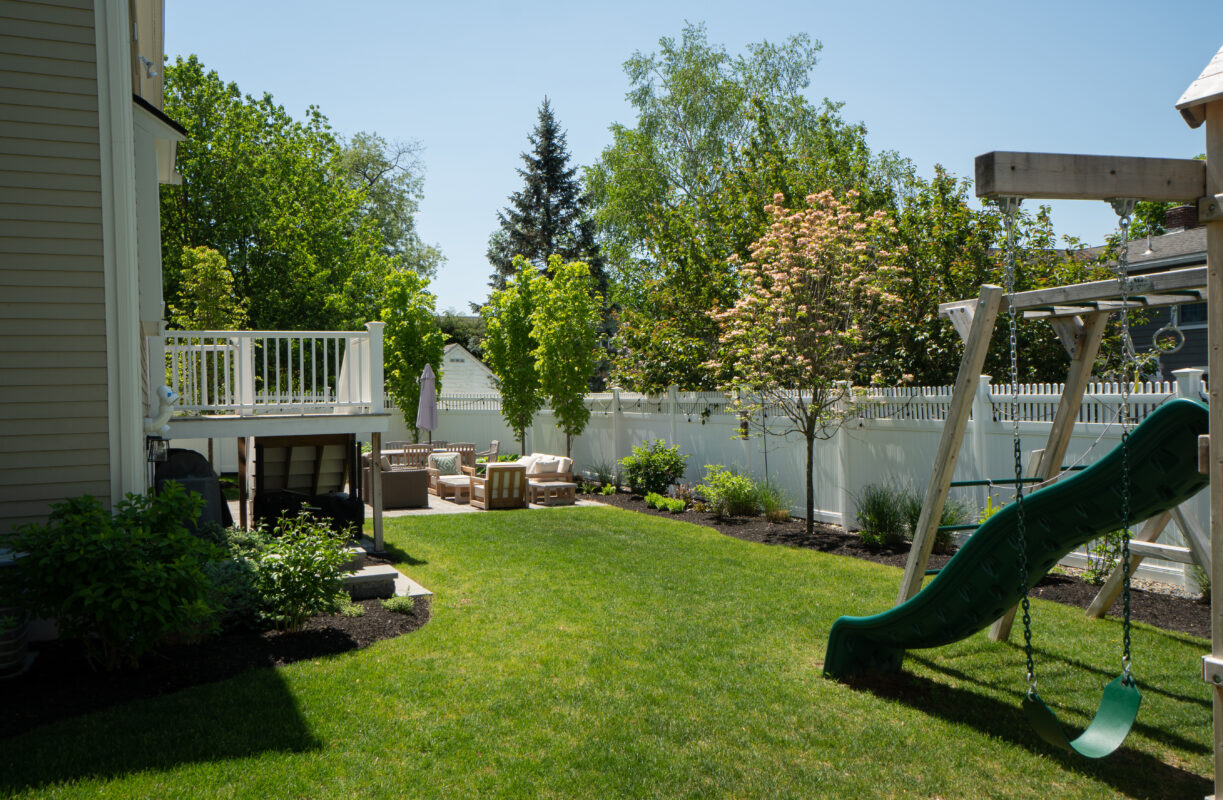
If you’re losing sleep or patience to traffic on a nearby road or noise from next door, the fence you install matters far more than most homeowners expect — and most contractor blogs on this topic won’t tell you why, because they skip the actual numbers.
Here’s the direct answer: a solid, gapless fence with enough mass — not just height — can reduce perceived noise by roughly 5–10 decibels, which is enough to make a real, noticeable difference (a 10 dB drop is perceived by the human ear as roughly “half as loud”). But the material matters, the fence has to be solid with no gaps, and in Massachusetts, how tall you’re allowed to build it is a separate legal question from how effective it is.
Why Height Isn’t the Main Variable — Mass and Airtightness Are
The instinct is to build the tallest fence allowed. That helps, but it’s not the primary driver of noise reduction. Sound is blocked by three factors, in order of importance:
- No gaps. A fence with even small gaps between boards loses most of its acoustic benefit — sound leaks through gaps disproportionately compared to how much material they represent. A picket fence, no matter how tall, does almost nothing for noise.
- Mass and density. Heavier, denser materials block more sound energy than light materials of the same thickness. This is why a cheap thin vinyl or thin wood fence underperforms a masonry wall or a mass-loaded composite panel even at the same height.
- Height and length. Once you have a solid, dense, gapless barrier, additional height and unbroken length along the property line increase the “shadow zone” where noise is reduced. A fence that’s too short or has gaps at the ends (driveways, gates) lets sound wrap around it.
Material Comparison: What Actually Works
| Material | Typical STC / Noise Reduction | Cost (installed, per linear ft) | Notes |
|---|---|---|---|
| Picket/lattice fence | Minimal (gaps defeat the purpose) | $15–$25 | Not a noise solution regardless of height |
| Standard wood privacy fence (solid boards, no gaps) | ~4–6 dB reduction | $25–$40 | Effective if boards are tight and staggered; degrades as wood shrinks/warps over time |
| Vinyl privacy fence (solid panel) | ~4–7 dB reduction | $30–$45 | Similar to wood but doesn’t warp; thinner panels underperform on mass |
| Mass-loaded vinyl (MLV) barrier + fence structure | ~7–10 dB reduction | $45–$70 | Purpose-built for sound; a dense vinyl/rubber composite layer added to a solid fence structure |
| Composite/engineered wood solid panel | ~5–8 dB reduction | $35–$55 | Denser than standard wood, holds shape better long-term |
| Masonry or concrete block wall | ~8–12+ dB reduction | $60–$120+ | Best acoustic performance available in a residential fence; also the most expensive and often requires engineering/permitting due to weight and wind load |
| Berm + solid fence combination | Adds 3–5 dB beyond fence alone | Varies (landscaping cost) | An earthen berm topped with a solid fence outperforms either element alone — often the best value for road noise specifically |
For road/traffic noise specifically, the berm-plus-fence combination is frequently the best return on investment, because it adds mass and height without the structural cost of a full masonry wall. For neighbor-to-neighbor noise where you don’t have room for a berm, mass-loaded vinyl added to a standard fence structure gives you most of the masonry benefit at a fraction of the cost and permitting complexity.
Road Noise vs. Neighbor Noise: Does the Source Change the Approach?
Road/traffic noise is broadband, constant, and comes from a fixed direction — this is where fence length and continuity matter most, because a gap or low spot anywhere along the road-facing side lets noise back in. It’s also where the berm-plus-fence approach performs best, since traffic noise partly travels along the ground and a berm interrupts that path in a way a fence alone can’t.
Neighbor noise (voices, a dog, mechanical equipment like an AC compressor) is often more localized and can include higher frequencies that a fence handles differently than the low rumble of traffic. For a specific point source like an AC unit, height and placement directly between the source and the affected area matters more than total fence length. Mass-loaded vinyl is particularly effective here because it’s easy to apply just to the section facing the actual noise source rather than an entire property line.
If your situation involves both — a busy road on one side and a noisy neighbor on another — you don’t need the same material treatment on both sides. It’s reasonable to run a berm-and-fence combination facing the road and a mass-loaded vinyl solid fence section facing the neighbor property.
Massachusetts Fence Height and Code Considerations
This is the part where “how tall can I legally build it” and “how effective is it” diverge, and homeowners often assume they’re the same question. They’re not.
- Height limits vary by municipality and by zoning district. Many Massachusetts towns cap residential fence height in front yards more restrictively than in side or rear yards, and it’s common for rear/side property-line fences to be allowed taller than front-yard fences — which works in your favor for a road-facing rear or side fence.
- Fences near a public way may have separate rules. Some towns apply additional setback or height restrictions to fences abutting a road right-of-way, distinct from standard residential fence height limits.
- Masonry and berm structures may trigger permitting that a standard fence wouldn’t. A concrete block wall or a significant berm can fall under different building code review than a wood or vinyl fence, due to structural and drainage considerations — check with your building department before finalizing a masonry noise wall.
- HOA or deed restrictions can be stricter than town code. Even if your municipality allows a taller solid fence, a homeowners association or deed covenant may cap height or restrict materials (masonry walls are commonly restricted even where town code would allow them).
The practical sequence: confirm your town’s height limit for the specific property line you’re fencing, confirm whether that section abuts a public way (which can change the rule), and only then choose the material — since the height ceiling may rule out reaching maximum acoustic benefit from a single fence and push you toward the berm-plus-fence combination instead.
Frequently Asked Questions
How much fence height do I actually need for noise reduction? Six feet is the practical minimum for meaningful reduction, since the fence needs to be taller than a person’s ear height on both sides to block direct line-of-sight sound transmission. Beyond that, additional height provides diminishing but real returns, particularly for road noise.
Will a fence completely block road noise? No. A well-built solid fence reduces noise by roughly 5–10 dB, which is a noticeable, worthwhile improvement, but it does not eliminate road noise entirely. Complete silence isn’t achievable with a residential fence alone.
Is mass-loaded vinyl worth the extra cost over a standard solid fence? For dedicated noise reduction, yes — it closes the gap toward masonry-level performance without masonry-level cost or permitting complexity, particularly for a targeted section of fence facing a specific noise source.
Do I need a permit for a noise reduction fence in Massachusetts? Standard wood or vinyl fences typically fall under standard fence permitting in most towns, but masonry walls, berms, or fences exceeding your district’s height limit often require additional review. Confirm with your local building department before installation, not after.
Dealing with road or neighbor noise and not sure which material fits your property line and town’s height rules? [Contact us] for a site evaluation that matches the fence design to your actual noise source and local code.
Start with a design consultation:
https://landdesignassociates.com/design-build-form/
Or explore our work here:
https://landdesignassociates.com/featured-projects/