

Creating Private Outdoor Sanctuaries for Homeowners Across Eastern Massachusetts
For homeowners in Eastern Massachusetts, large properties are both a blessing and a challenge. Expansive yards offer space for entertaining, gardening, and relaxation, but they can also leave you feeling exposed — to neighbors, roads, or new developments. That’s where privacy landscaping comes in.
Thoughtful landscape architectural design transforms open acreage into secluded outdoor rooms, balancing function and beauty. Whether your goal is to block views, reduce noise, or simply carve out a more intimate retreat, privacy landscaping creates a sanctuary you’ll love year-round.
At Land Design Associates in Walpole, Massachusetts, our team of Certified Landscape Professionals designs and builds outdoor spaces that feel personal, natural, and private — perfectly suited for life in Needham, Wellesley, Dover, Westwood, and the Greater Boston area.
👉 See our work: https://landdesignassociates.com/featured-projects/
👉 We are certified Landscape Professionals: https://www.mlp-mclp.org/
Why Privacy Landscaping Matters
Privacy isn’t just about keeping others out — it’s about inviting peace in. Large yards often feel open to the world, and many New England homes sit near busy roads, new subdivisions, or expanding neighborhoods.
Landscaping for privacy creates comfort, beauty, and security. It:
-
Defines outdoor rooms for dining, lounging, and play.
-
Buffers unwanted noise from roads or neighbors.
-
Adds natural beauty through layered plantings and texture.
-
Increases property value and curb appeal.
By using a blend of plants, natural materials, and landscape structures, homeowners can enjoy seclusion without losing the open feel of a large property.
Step One: Define Your Privacy Goals
Before breaking ground, it’s essential to clarify what type of privacy you actually want. Every yard — and every homeowner — has unique needs.
1. Visual Privacy
Block views of neighbors, nearby roads, or utility structures with dense evergreen screening, decorative fences, or strategic topography.
2. Sound Privacy
For properties near traffic or active neighborhoods, vegetation can act as a sound barrier. Layered plantings absorb and deflect noise naturally.
3. Spatial Zoning
In large yards, define separate “zones” — such as a pool area, fire pit, or outdoor kitchen — with hedges, pergolas, or small tree groupings that create visual boundaries without enclosing the entire yard.
4. Seasonal Privacy
In Massachusetts, privacy needs shift with the seasons. Consider if you need screening year-round or primarily in spring and summer when outdoor use peaks.
These decisions shape your plant palette, layout, and maintenance plan.
Plant-Based Privacy Solutions
When done right, plant-based privacy feels natural and timeless. It softens the landscape and blends with your environment, unlike solid fences that can feel harsh or artificial.
Evergreen Trees: Year-Round Screening
For consistent privacy, evergreen trees form the backbone of most screening plans in New England.
Top Picks for Massachusetts Yards:
-
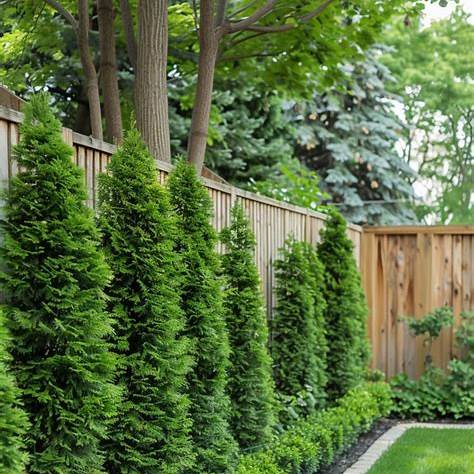
Arborvitae (Thuja occidentalis): A classic favorite for dense hedges. ‘Green Giant’ is especially fast-growing and tolerant of varied soil.
-
Eastern White Pine (Pinus strobus): Native, tall, and ideal for large properties. It grows quickly and provides a soft, natural texture.
-
Norway Spruce (Picea abies): Excellent cold hardiness with a formal, pyramidal shape.
Pro Tip: Mix species to avoid uniform hedges that can fail all at once if hit by pests or winter burn.
Deciduous Trees and Shrubs: Beauty with Seasonal Change
While they lose leaves in winter, deciduous species bring lush summer privacy and vivid color throughout the year.
Recommended Choices:
-
Red Maple (Acer rubrum): Brilliant fall color, shade, and summer screening.
-
Lilacs (Syringa vulgaris): Classic New England bloom with fragrance and dense seasonal cover.
-
Serviceberry (Amelanchier canadensis): Native shrub-tree hybrid that offers spring flowers, berries, and vibrant fall color.
These plants deliver both aesthetic appeal and functional screening during the months you’re outdoors most.
Layered Planting: Nature’s Best Strategy
True privacy rarely comes from a single row of trees. The most effective approach mimics the forest edge — a mix of tall evergreens, mid-sized shrubs, and groundcover.
This layered look offers:
-
Depth and visual softness instead of a wall-like appearance.
-
Habitat for pollinators and birds.
-
Seasonal texture and color.
For instance, you might pair White Pine behind Viburnum and Winterberry, then add ferns or hostas along the base for a lush, layered composition.
Fast-Growing Options: When Privacy Can’t Wait
If immediate screening is a priority, consider Hybrid Willows or Leyland Cypress. They grow quickly but require careful maintenance and may not live as long as native species.
For a more sustainable fast-grower, ‘Green Giant’ Arborvitae and River Birch offer quick establishment with regional adaptability.
Structural Privacy Features
While plants create softness and natural beauty, built features provide instant privacy and architectural interest. The key is blending both for a cohesive landscape design.
Fences and Walls
-
Cedar Fences: Durable, warm-toned, and classic New England style.
-
Composite Materials: Low-maintenance and weather-resistant.
-
Stone Walls: Timeless and authentic, particularly in towns like Walpole, Dover, or Sherborn, where stone fits the rural aesthetic.
Pergolas and Trellises
Perfect for patios or outdoor dining spaces, these structures define space while supporting climbing plants like Clematis, Hydrangea petiolaris, or Native Honeysuckle.
Screens and Panels
Portable lattice screens or bamboo panels create flexible privacy for seating areas or pool decks without blocking sunlight or airflow.
Design Strategies for Large Yards
1. Create Outdoor Rooms
Think of your landscape as an extension of your home — with defined “rooms” for different activities. Use shrubs, trees, and stone walls to create cozy corners within expansive yards.
A grove of birches can wrap around a fire pit, while a row of viburnum screens off a play area or vegetable garden.
2. Use the Land’s Natural Topography
Work with what’s already there. Slight berms or slopes topped with evergreens can provide subtle screening without blocking views.
If your property borders wetlands or wooded edges, use those natural features to your advantage — they already provide structure and ecological benefits.
3. Balance Openness and Seclusion
The best privacy designs still allow moments of openness. Instead of a continuous hedge, try staggered groupings of plants that maintain visual interest and depth.
4. Incorporate Soundscaping
Noise from nearby roads can disrupt tranquility. Adding fountains, bubbling urns, or natural streams helps mask sound, especially when paired with dense plantings.
Best Plants for Privacy Landscaping in Eastern Massachusetts
Our region’s Zone 6b climate demands resilient, adaptable species. Here are some homeowner favorites for effective and beautiful screening:
| Plant | Type | Key Benefit |
|---|---|---|
| Inkberry Holly (Ilex glabra) | Evergreen shrub | Dense, native, and salt-tolerant. |
| Highbush Blueberry (Vaccinium corymbosum) | Deciduous shrub | Edible berries, fall color, seasonal privacy. |
| Bayberry (Myrica pensylvanica) | Semi-evergreen | Hardy, fragrant, great for coastal properties. |
| River Birch (Betula nigra) | Deciduous tree | Multi-stemmed, striking bark, natural screen. |
| American Holly (Ilex opaca) | Evergreen tree | Long-lived, dense cover, classic New England style. |
| Switchgrass (Panicum virgatum) | Ornamental grass | Adds movement, texture, and low maintenance. |
Each of these species thrives in Eastern Massachusetts soils and supports pollinators and wildlife, making your privacy landscaping not just functional — but ecologically valuable.
Case Study: A Private Oasis in Dover, MA
A Dover homeowner came to Land Design Associates with a common challenge: a two-acre property bordered by a busy road and new home construction. The goal was privacy for a pool and entertaining area — without enclosing the entire landscape.
Our design included:
-
A staggered row of White Pines along the road for year-round screening.
-
Layered plantings of Lilac, Serviceberry, and Viburnum near the pool, blending color and texture.
-
A cedar pergola with climbing hydrangea for intimacy and summer shade.
-
A gentle berm along the property line topped with Bayberry and Inkberry, softening the transition to neighboring lots.
The result? A private backyard retreat that feels both open and secluded — exactly what large properties need to feel human-scaled and comfortable.
Long-Term Maintenance Considerations
Creating privacy is only the beginning — maintaining it ensures beauty for decades.
1. Growth Rate and Spacing
Allow enough room for plants to mature. Overcrowding leads to dieback and disease.
2. Pruning and Health Care
Annual pruning encourages density in hedges and keeps trees shapely. Consider professional horticultural pruning to maintain form.
3. Wildlife and Ecology
Privacy plantings often double as habitat for birds and pollinators. Choose native plants when possible to support local biodiversity.
4. Winter Planning
Deciduous plants lose coverage in winter, so include evergreen anchors or hardscape elements (like walls and pergolas) for year-round privacy.
5. Local Regulations
Before building fences or planting close to property lines, always check local zoning bylaws. Many Massachusetts towns restrict fence height, tree placement, or berm construction.
Enhancing Privacy with Lighting and Landscape Features
Privacy design doesn’t stop at plants — lighting and materials play a major role in shaping ambiance.
-
Low-voltage path lighting defines walkways without glare.
-
Downlighting from trees or pergolas creates intimate “moonlight” effects.
-
Natural stone patios and fire features create focal points that draw the eye inward rather than toward neighbors.
Proper lighting not only improves safety but helps maintain the sense of calm and seclusion after sunset.
Final Thoughts: Privacy That Feels Natural
Landscaping for privacy in large yards is about creating comfort without confinement. With a thoughtful blend of evergreens, native shrubs, stonework, and spatial design, you can turn even the most open property into a private sanctuary.
At Land Design Associates, we specialize in landscape architectural design that enhances beauty, function, and sustainability — ensuring every inch of your property works for you.
Let’s design your private paradise today.
👉 See our work: https://landdesignassociates.com/featured-projects/
👉 Schedule your consultation: https://landdesignassociates.com/design-build-form/
👉 We are certified Landscape Professionals: https://www.mlp-mclp.org/