

Landscape Transformation: Ledge-Inspired Family Retreat in Wrentham, Massachusetts
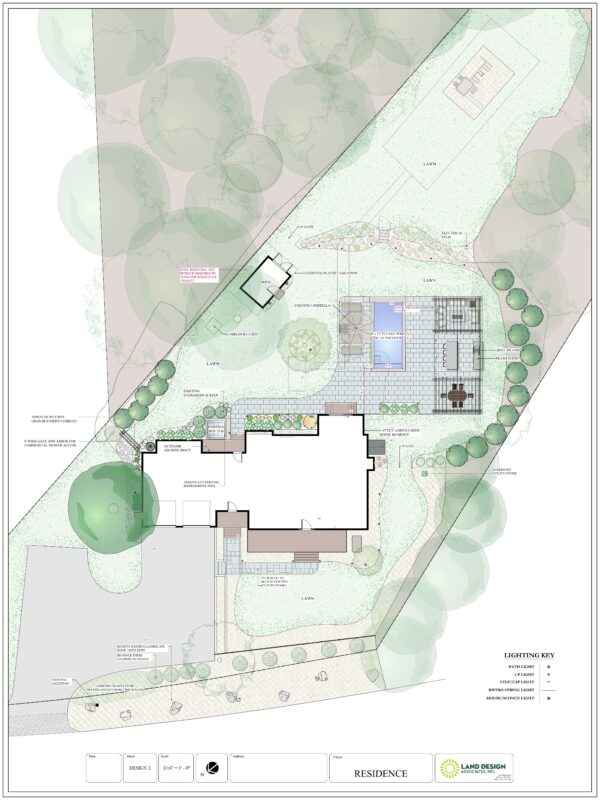
Designing a successful Central Massachusetts Landscape requires a deep understanding of site conditions, client goals, and long-term functionality. In Wrentham, Massachusetts, Land Design Associates was commissioned to transform a challenging backyard into a highly functional, visually cohesive outdoor living environment. The result is a refined example of integrated landscape design and landscape architecture, where natural features and constructed elements work seamlessly together.
From the outset, this project was defined by both ambition and complexity. The homeowners—a young family of five—envisioned a backyard capable of hosting large gatherings while supporting everyday family use. With three active children, two dogs, and a strong desire for outdoor entertaining, the program required a spacious pool, flexible seating areas, and multiple zones for recreation and relaxation. However, the defining characteristic of the site was a dramatic 20-foot granite ledge rising along the rear property line.
Rather than viewing the ledge as a limitation, the design team recognized it as the central opportunity. This approach reflects a core principle of professional landscape architecture: successful projects emerge from working with the land, not against it.
Site Analysis and Design Strategy
In any Central Massachusetts Landscape project, particularly those involving ledge or significant grade change, thorough site analysis is critical. The Wrentham property required careful evaluation of elevation changes, drainage patterns, soil conditions, and structural stability of existing rock formations.
The granite ledge presented both constraints and opportunities. Its steep vertical face could have limited usable space, but its natural terraces and outcroppings offered a ready-made framework for organizing the site. By mapping these features early in the design process, Land Design Associates developed a strategy that minimized site disturbance while maximizing usability.
Avoiding excessive blasting or removal of ledge was a key consideration. Not only does this reduce construction costs, but it also preserves the natural character of the site—an important factor in high-quality landscape design throughout Massachusetts.
Pool Integration Within a Natural Setting
The pool was the centerpiece of the project, designed to accommodate both recreation and aesthetics. Given the irregular geometry created by the ledge, a traditional rectangular pool would have felt disconnected from its surroundings. Instead, a freeform pool was selected to reflect the organic shapes found in nature.
This design decision allowed the pool to integrate seamlessly into the landscape. Its curves respond to the contours of the ledge, creating a composition that feels intentional rather than imposed. This is a defining characteristic of thoughtful landscape architecture, where form follows both function and context.
The pool edge further reinforces this integration. Natural boulder coping, sourced to match the existing granite, creates a soft transition between water and land. Unlike uniform manufactured edges, this detail introduces variation and texture, enhancing the naturalistic aesthetic.
Surrounding plantings were layered to blur the boundary between pool and landscape. Low-growing perennials, ornamental grasses, and strategically placed shrubs create a gradual transition, making the pool appear as though it has always been part of the site.
Multi-Level Design and Spatial Organization
One of the most significant advantages of the existing ledge was its ability to support a multi-level layout. Instead of flattening the site, the design leverages elevation changes to create distinct outdoor rooms.
These include:
- Primary entertaining areas located adjacent to the pool, designed for larger gatherings and social events.
- Secondary seating zones positioned on natural ledge terraces, offering more intimate spaces with views of the yard.
- Upper-level retreats that provide quiet, secluded areas for relaxation.
This layered approach enhances both functionality and visual interest. It allows different activities to occur simultaneously without conflict, an important consideration in residential landscape design.
Circulation between levels was carefully planned to ensure accessibility and safety. Natural stone steps and pathways were integrated into the ledge, maintaining a cohesive aesthetic while providing clear movement throughout the site.
Material Selection and Construction Approach
Material consistency is essential in projects where natural features dominate the landscape. In this Wrentham backyard, the existing granite ledge established a strong visual identity that needed to be respected.
To achieve this, additional stone elements were sourced from local Massachusetts quarries, ensuring a close match in color and texture. These materials were used for retaining elements, steps, and accent features, allowing new construction to blend seamlessly with the existing environment.
Hardscape surfaces were selected to complement the stone without competing with it. Neutral tones and natural finishes maintain visual balance, allowing the ledge to remain the focal point of the composition.
This attention to materiality is a hallmark of high-quality landscape architecture, where every element contributes to a cohesive whole.
Planting Design and Environmental Integration
Planting plays a critical role in softening the structural elements of the landscape. Without vegetation, the granite ledge could feel imposing. Through thoughtful planting design, it becomes a dynamic and inviting backdrop.
The planting strategy focused on:
- Softening vertical transitions along the base of the ledge
- Creating seasonal interest through varied textures and bloom times
- Enhancing privacy along property edges
- Supporting local ecology and pollinators
Plant selections were tailored to the site’s conditions, including well-drained soils and full sun exposure. This ensures long-term success with minimal maintenance, a key consideration for homeowners.
From a broader Central Massachusetts Landscape perspective, the planting design also contributes to sustainability by improving stormwater management and reducing heat absorption.
Outdoor Lighting and Evening Use
Lighting design extends the usability of the space beyond daylight hours. In this project, a layered approach was used to create a balanced and inviting nighttime environment.
Key elements include:
- Subtle uplighting to highlight the texture of the granite ledge
- Pathway lighting for safe navigation between levels
- Ambient lighting in gathering areas to support evening activities
The goal was to enhance visibility and atmosphere without overwhelming the natural setting. This restrained approach is consistent with best practices in landscape design, where lighting should complement rather than dominate the space.
Functional Program and Lifestyle Integration
Beyond its visual appeal, the backyard was designed to support a wide range of activities. The program includes:
- A spacious pool for recreation and exercise
- Flexible entertaining areas for hosting friends and family
- A private fire pit for year-round use
- Open lawn and transitional spaces for children and pets
- Areas suitable for outdoor media and relaxation
Each element was positioned to take advantage of the site’s natural structure while maintaining strong connections between spaces. This integrated approach reflects the principles of professional landscape architecture, where function, circulation, and aesthetics are considered simultaneously.
Long-Term Performance and Value
A well-designed Central Massachusetts Landscape must perform over time. In Wrentham, this meant selecting durable materials, designing for drainage, and choosing plantings that would mature gracefully.
The multi-level layout provides flexibility as the family’s needs evolve. Spaces that currently support young children can adapt to different uses in the future, ensuring long-term relevance.
Maintenance was also a key consideration. By working with the existing site conditions and selecting appropriate materials and plants, the design minimizes ongoing upkeep while maintaining its visual quality.
Conclusion
This Wrentham project demonstrates how thoughtful landscape design and landscape architecture can transform a challenging site into a highly functional and visually compelling outdoor environment. By embracing the natural granite ledge and integrating it into every aspect of the design, Land Design Associates created a space that is both distinctive and enduring.
As a model for Central Massachusetts Landscape projects, it highlights the value of site-responsive design, material consistency, and program integration. The result is a backyard that supports daily life, enhances property value, and provides a setting for years of family enjoyment.
Trust Land Design Associates for Expert Landscape Design in Massachusetts
Understanding how winter conditions affect plant health is an important part of professional landscape care. Snow is not just a sign of winter—it is a natural protective system that helps preserve the beauty, health, and longevity of your landscape.
If you have questions about winter landscape care, planting design, or planning a new outdoor space, Land Design Associates is here to help.
Ready to Create a Cohesive Outdoor Living Space?
If you’re ready to transform your property into a thoughtfully designed outdoor environment, Land Design Associates, Inc. is here to help.
📍 Serving Walpole, MA & Cohasset, MA
📞 Contact us today to schedule a professional landscape design consultation.
Book a design consultation here https://landdesignassociates.com/maintenance/
🌐 Portfolio: https://landdesignassociates.com/featured-projects/