

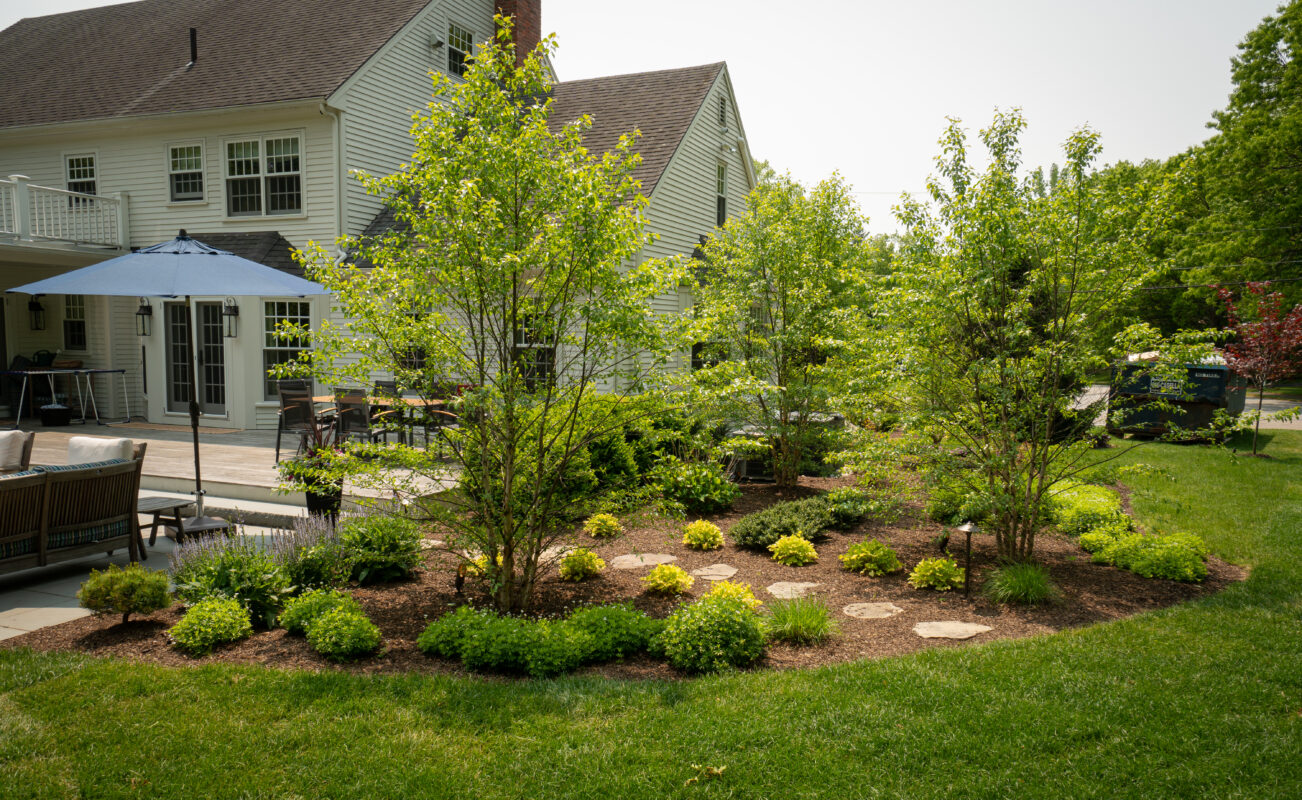
Luxury Landscape Design in New England: How to Have Elegance Without the Upkeep
Every homeowner across Greater Boston and the South Shore eventually asks the same question: how do you build a landscape that looks effortlessly polished without spending every weekend maintaining it? The answer lies in a growing shift in luxury landscape design, one that favors durable materials, native plantings, and climate-aware planning over high-input lawns and fussy annual beds.
This approach isn’t a compromise. It’s the new definition of high-end property design in New England: refined, resilient, and built to perform with minimal intervention.
What Makes a Landscape “Luxury” and Low-Maintenance at the Same Time?
The perception that luxury requires constant upkeep is outdated. Today’s most sought-after properties in Wellesley, Duxbury, Hingham, and along the South Shore are designed with low-maintenance gardening principles at the core. It’s not an afterthought; it’s the organizing design philosophy from day one.
The formula is simple: strong hardscape architecture, climate-matched plant selection, and smart systems that reduce ongoing labor. When these three elements work together, a property looks intentional in every season, not just for the two weeks after a landscaping crew’s last visit.
Start With Durable Hardscape, Not More Plants
The most common mistake in landscape planning is assuming a lower-maintenance yard means fewer plants. In reality, the biggest maintenance reduction comes from better bones: the hardscape.
Bluestone patios, granite steps, permeable pavers, and dry-stacked stone walls are chosen specifically for New England’s freeze-thaw cycles, so they resist heaving, cracking, and fading through harsh winters. These materials function as the architecture of the outdoor space, while plantings serve a supporting role.
This is the foundation of true high-end garden design: a landscape that reads as finished and elegant even in the dead of winter, when nothing is in bloom.
Native Plantings: The Secret to Effortless Elegance
If hardscape is the skeleton, native plants are the muscle, and they’re the smartest long-term investment a homeowner can make.
Species like inkberry holly, little bluestem, switchgrass, red twig dogwood, and eastern redbud have adapted over thousands of years to New England’s soil, rainfall, and freeze line. That means they require less water, less fertilizer, and virtually no pest management compared to imported ornamentals never built for a Massachusetts July or a February thaw.
The result is genuine drought-tolerant landscaping that doesn’t sacrifice visual richness:
- Winter structure from ornamental grasses catching frost
- Early spring interest from serviceberry blooming before leaf-out
- Rich fall color from native asters and viburnum foliage
Native doesn’t mean unkempt. Skilled designers use native species in the same structured, layered way traditional gardens use non-natives: clipped inkberry hedges instead of boxwood, sweeping drifts of little bluestem instead of grasses requiring winter protection. The result is equally polished, with a fraction of the maintenance.
Designing for New England’s Actual Climate
New England’s weather has always demanded flexibility from gardeners, but the range of extremes has widened. Summers bring longer dry stretches and heavier downpours. Winters bring thaws that confuse plants into budding too early. A landscape designed for yesterday’s climate patterns becomes high-maintenance simply because it’s constantly fighting conditions it wasn’t built for.
Climate-smart planning includes:
- Grading and drainage that direct heavy rain away from foundations and patios
- Permeable hardscape that allows stormwater infiltration instead of runoff
- Microclimate-matched plant selection, since a south-facing slope near the South Shore’s salt air needs different plants than a shaded corner inland
- Reduced turf areas, since traditional lawn remains the most water-intensive, fertilizer-intensive, and labor-intensive part of most properties
This isn’t only an environmental consideration. It’s a practical one. A landscape designed around real climate data needs less correcting and less emergency repair after the next unpredictable storm.
Designing Outdoor Spaces for How You Actually Live
Luxury outdoor living in this region increasingly centers on well-defined outdoor rooms: a stone patio for dining, a fire feature for shoulder-season evenings, or a quiet reading nook tucked behind a native hedge. These spaces are meant to be used, not just maintained.
Features that support this include:
- Smart irrigation controllers that water only when and where needed
- Low-voltage landscape lighting that extends usable hours without seasonal setup
- Evergreen structure that keeps outdoor rooms composed through the gray months
- Container plantings for seasonal color, containing any high-maintenance elements to a few pots rather than entire beds
The goal is a property that feels effortless to live in, because the effort was invested upfront in design and installation rather than every weekend after.
Sustainable Doesn’t Mean Sacrificing Polish
There’s a persistent myth that sustainable landscaping requires a looser, wilder look. In practice, the opposite is often true. Native plants, efficient irrigation, permeable materials, and reduced lawn coverage are what allow a landscape to stay polished. They don’t degrade under stress the way high-input landscapes do after a hot week or a missed watering.
The most refined properties in Greater Boston are increasingly the most sustainable ones. That’s not despite the sustainability. It’s because of it.
(Internal link placeholder: Link this sentence to your own “Sustainable Landscape Services” or portfolio page, for example /services/sustainable-landscape-design)
(External link placeholder: Reference a native plant resource such as the New England Wild Flower Society or UMass Extension for added topical authority. Rank Math and AEO systems favor pages that cite credible external sources.)
Frequently Asked Questions
What is luxury landscape design? Luxury landscape design combines high-quality materials, thoughtful spatial planning, and refined plant selection to create an outdoor space that feels elevated and intentional, while often incorporating low-maintenance and sustainable practices for long-term ease of care.
Can a low-maintenance landscape still look high-end? Yes. By investing in durable hardscape, native plantings, and climate-appropriate design upfront, a landscape can maintain a polished, upscale appearance with significantly less ongoing labor than traditional high-input lawns and gardens.
What plants work best for drought-tolerant landscaping in New England? Native species such as little bluestem, switchgrass, inkberry holly, red twig dogwood, and eastern redbud thrive in New England’s soil and rainfall patterns, requiring less water and maintenance than non-native ornamentals.
How much can native plants reduce landscape maintenance? Native plants typically require significantly less watering, fertilizing, and pest management than non-native species, since they’re already adapted to local soil and climate conditions.
The Bottom Line
A low-maintenance luxury landscape isn’t a contradiction. It’s the result of intentional design. Durable, well-proportioned hardscape anchors the property year-round. Native and climate-adapted plantings thrive with minimal input. Smart planning accounts for New England’s water, wind, and freeze-thaw realities instead of fighting them. And every choice supports how homeowners actually want to live outdoors.
For homeowners across the South Shore and Greater Boston, this is the new standard: a landscape refined enough to impress, resilient enough to thrive independently, and thoughtful enough to give you your weekends back.
Ready to design a landscape built for New England’s climate and your lifestyle? Contact our team to start planning your property’s next chapter.
Start with a design consultation:
https://landdesignassociates.com/design-build-form/
Or explore our work here:
https://landdesignassociates.com/featured-projects/