

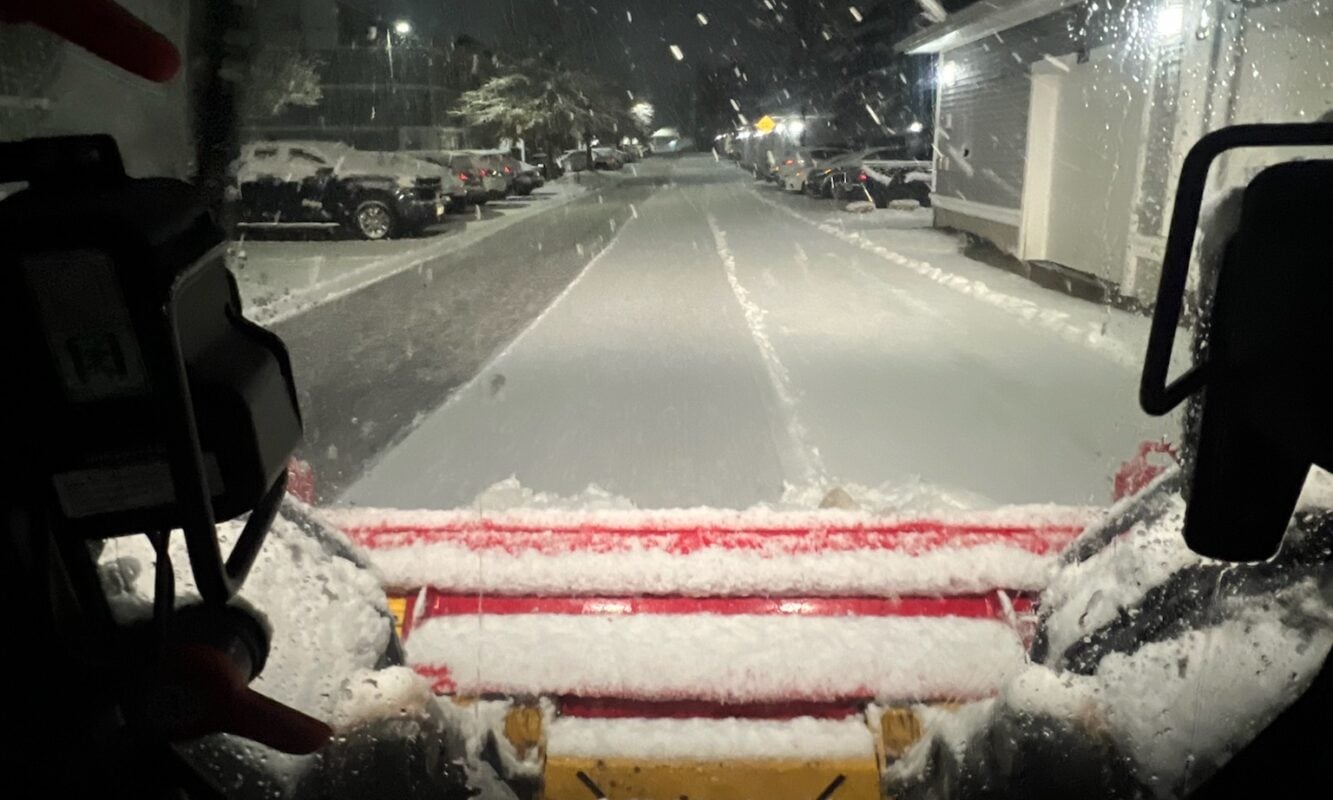
Picking a commercial snow removal contractor is one of the few property decisions where a bad choice shows up all at once. It happens at 5 a.m., in the middle of a nor’easter, with tenants calling and customers slipping in your parking lot. Price matters, but it’s rarely what separates a good contractor from a bad one. Response times, insurance, documentation, and clear contract terms are what protect your property and your liability.
If you manage a retail center, office park, medical building, or HOA in northern Rhode Island, whether in Woonsocket, Cumberland, Lincoln, or Pawtucket, here are nine questions to ask before you sign for the 2026–2027 season.
Why Choosing the Right Commercial Snow Removal Contractor Matters
Rhode Island winters are unpredictable. One week brings a dusting, the next a two-foot coastal storm followed by freezing rain. A contractor who looks fine on paper in October can fall apart in February if they’ve taken on more properties than their equipment and crews can handle.
When that happens, the consequences land on you. Blocked entrances cost tenants business. Icy walkways lead to slip-and-fall claims. Damaged curbs and turf turn into spring repair bills. The right contractor prevents all of this. The wrong one creates it.
1. Do They Have the Capacity to Serve Your Property?
Ask how many properties are on the route your lot will be assigned to, and how long a full route takes during a heavy storm. A contractor with 40 accounts and three trucks can’t clear every lot by opening time, no matter what the contract says.
Also ask about backup equipment. Plows break down in the middle of storms. Find out whether they have spare trucks, loaders, or subcontractors ready, and how quickly a replacement can reach your lot.
Location matters too. A contractor based nearby can respond faster and monitor conditions more closely than one driving in from an hour away.
2. What Are Their Response Times and Trigger Depth?
Two numbers should be written into every commercial snow removal contract:
- Trigger depth is the snowfall depth at which plowing begins. It’s commonly 1 to 3 inches for commercial properties.
- Response time is how quickly the crew arrives once the trigger is reached, and when the lot will be fully open.
Ask how they prioritize properties during overnight storms. Hospitals, medical offices, and retail lots often need to be open before staff arrive. If your property has a hard opening time, make sure it’s written in the contract, not just promised on the phone.
3. How Do They Document Their Work?
This is the question most property managers forget, and it’s one of the most important. If someone slips on your property, your insurance company and attorney will want to know exactly when the lot was plowed and when it was treated for ice.
A professional contractor should provide:
- Timestamped photos of the lot before and after service
- GPS tracking or service logs showing arrival and departure times
- Records of ice melt applications, including when, where, and how much
- Storm reports you can access after each event
If a contractor can’t show you a sample of their documentation, treat that as a warning sign. Without records, you have no way to prove your property was maintained.
4. Are They Properly Insured?
Never hire a snow contractor without seeing a current certificate of insurance. At a minimum, ask about:
- General liability, with limits appropriate for commercial properties
- Commercial auto coverage for plow trucks and equipment
- Workers’ compensation for their employees
- Whether their general liability policy excludes snow and ice operations, since some policies do
Ask to be named as an additional insured on their policy. Then have your insurance agent review the certificate and contract language. Indemnification clauses in snow contracts vary widely, and they matter a great deal if a claim is ever filed.
5. Which Contract Structure Fits Your Property?
Commercial snow removal contracts generally come in three forms:
- Per push (per visit): You pay each time a truck plows. This is flexible, but costs rise quickly in a heavy winter.
- Per event: You pay a set price per storm, often tiered by snowfall depth. This makes budgeting easier than per push.
- Seasonal: You pay a fixed price for the whole winter, regardless of snowfall. You get predictable costs, but you pay the same in a light year.
There’s no universally right answer. Seasonal contracts suit properties that need budget certainty. Per-event contracts suit properties that want to pay closer to actual conditions. Whatever you choose, make sure the contract clearly defines what counts as an “event” and what services are included.
6. How Do They Handle Ice Management?
Plowing moves snow. Ice management keeps people safe. Ask:
- Is salting or ice melt included, or billed separately?
- Do they pre-treat before storms?
- Do they return for refreeze conditions overnight?
- What materials do they use near sensitive areas like plantings, pavers, or new concrete?
- Who is responsible for sidewalks and entrances versus the parking surface?
Entrances, walkways, accessible parking spaces, and ramps should always be top priority.
7. Do They Have a Snow Storage and Relocation Plan?
Every lot runs out of room eventually. Ask where the contractor plans to pile snow on your property. Piles should stay clear of drains, fire lanes, building entrances, accessible spaces, and sight lines at exits.
For tight lots, ask whether they offer snow relocation, meaning loading and hauling snow off-site. Find out how it’s priced and what triggers it. Settling this in October is far better than negotiating it after a blizzard.
8. Will They Do a Pre-Season Site Walk?
A professional contractor will want to walk your property before winter. During the visit, they should:
- Identify curbs, islands, drains, and hazards
- Install snow stakes so operators can see edges under deep snow
- Photograph existing damage so it isn’t blamed on plowing later
- Agree on snow pile locations and priority areas
Ask how they handle damage caused during plowing, such as curbs, turf, signs, or light poles. A clear damage policy protects both sides.
9. How Do They Communicate During Storms?
When a storm hits, you need to reach someone. Ask:
- Who is my point of contact, and are they reachable overnight?
- Will I get updates when service starts and finishes?
- How quickly are complaints or missed areas addressed?
Then ask for references from properties similar to yours, and actually call them. Ask how the contractor performed during the biggest storm of last season.
Red Flags to Watch For
- No written contract, or a vague one-page agreement
- Refusal to provide a certificate of insurance
- No documentation or service records
- A price far below every other bid
- No backup equipment plan
- Pressure to sign immediately without a site visit
Frequently Asked Questions
When should I hire a commercial snow removal contractor in Rhode Island?
Start comparing contractors in September and sign by October or early November. Reliable contractors fill their routes early, and signing before the season leaves time for a pre-season site walk and snow stake installation.
What insurance should a commercial snow removal contractor have?
At minimum, look for general liability, commercial auto, and workers’ compensation coverage. Confirm the policy doesn’t exclude snow and ice work, and ask to be named as an additional insured. Have your insurance agent review the certificate.
Is a seasonal or per-event snow removal contract better?
Seasonal contracts offer predictable budgeting regardless of snowfall. Per-event contracts cost less in light winters and more in heavy ones. The right choice depends on whether your property values budget certainty or paying for actual conditions.
Why does snow removal documentation matter?
Timestamped photos and GPS service logs prove when your lot was plowed and treated. That record is critical if a slip-and-fall claim is filed, and it helps you verify you’re being billed for work actually performed.
Work With a Contractor Who Plans Ahead
Land Design Associates provides commercial snow removal for properties across northern Rhode Island and southeastern Massachusetts, with [insert real strengths: e.g., written response times, GPS-tracked service logs, and full insurance documentation]. [Link: snow removal service page]
Contact us today Responsive Snow Removal for Commercial & HOA Properties | LDA to schedule a pre-season site walk and lock in your spot for the 2026–2027 winter.