

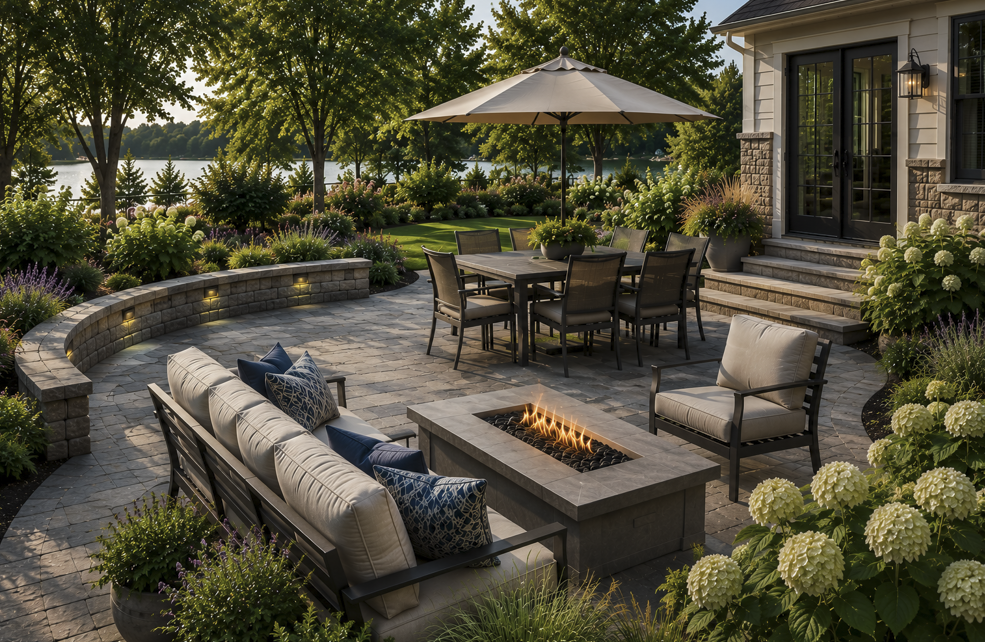
Your Patio Doesn’t Have to Be Just a Big Rectangle by the Back Door
Your patio should be more than an afterthought — it’s the foundation of your outdoor living space. The way it’s sited, shaped, and connected to your home determines how often you’ll use it and how much enjoyment it brings throughout the year.
At Land Design Associates in Walpole, Massachusetts, our landscape architects and design-build experts create outdoor spaces that reflect each homeowner’s lifestyle. From cozy breakfast terraces to sprawling entertaining patios, we transform backyards across Newton, Needham, Wellesley, Westwood, Dover, Norwood, and the Greater Boston suburbs into stunning extensions of the home.
Why Patio Siting Matters
The placement of your patio is one of the most critical — and overlooked — decisions in the design process. A poorly sited patio can go unused, while a well-planned one becomes the most beloved part of the property.
1. Sunlight and Shade
Consider where the sun hits your yard at different times of day.
-
Morning coffee? A patio facing east captures warm morning sun.
-
Evening entertaining? A west-facing terrace provides a comfortable glow at sunset.
-
For midday relief, integrate pergolas, shade sails, or strategically placed trees into your landscape architecture.
At Land Design Associates, we often use 3D modeling and site analysis to determine the perfect location that balances light, shade, and privacy.
2. Privacy and Views
A well-designed patio layout should protect you from unwanted views while framing the ones you love.
-
Use evergreen screening, ornamental grasses, or masonry walls to create cozy outdoor rooms.
-
Align seating areas toward natural focal points — a fire pit, water feature, or beautiful garden bed.
Our team of landscape designers blends aesthetic design with functional privacy solutions, ensuring your outdoor retreat feels intimate and inviting all year long.
3. Connection to the Home
The transition between indoor and outdoor spaces should feel seamless. Patios that are directly off a kitchen or living room tend to get the most use, especially when you can see the space from inside.
We recommend:
-
Aligning sliding doors or French doors with outdoor dining zones.
-
Incorporating matching flooring tones or stone materials to create visual harmony.
-
Using lighting and planting to draw your eye outdoors, even in winter.
This type of landscape architectural design transforms your patio into a true extension of your home’s living space.
Choosing the Right Patio Materials
Every landscape design tells a story — and your choice of materials sets the tone. Whether you prefer the rustic warmth of natural stone or the clean geometry of concrete pavers, the material palette influences durability, aesthetics, and cost.
1. Natural Stone Patios
Bluestone, granite, and fieldstone are timeless New England favorites. Their natural variation complements traditional homes in Wellesley, Dover, and Needham, while their durability stands up to freeze-thaw cycles common in Massachusetts landscapes.
2. Concrete and Paver Patios
For a more contemporary aesthetic, modern pavers from brands like Unilock, Techo-Bloc, and Cambridge Pavers offer versatility and color consistency. With proper base preparation and jointing sand, they’re low-maintenance and long-lasting.
3. Mixed-Material Design
Many landscape architects blend materials to define spaces — for example, pairing bluestone inlays with Techo-Bloc borders or integrating permeable paver strips to manage stormwater. This kind of thoughtful landscape architecture creates both visual interest and environmental sustainability.
Designing for Functionality
The best patios aren’t just beautiful — they’re functional, comfortable, and tailored to how you live. Here’s how professional design makes a difference.
1. Size and Proportion
Avoid the “too small to be useful” mistake. A 6-foot deep patio may work for a small café table, but a dining set needs at least 10 to 12 feet of depth.
Our design-build team helps determine ideal dimensions based on furniture, circulation, and desired uses.
2. Circulation and Flow
A successful landscape architectural design allows easy movement between spaces.
-
Walkways should connect the patio to driveways, side yards, and gardens.
-
Outdoor kitchens or grill islands should be near utilities but out of the main path.
-
Lounge zones should feel private, yet connected.
3. Multi-Level Patios
On sloped properties — common in Westwood and Sharon — multi-level patios can create distinct spaces for dining, lounging, and recreation. Retaining walls, stairs, and integrated plantings blend the architecture naturally into the landscape.
Enhancing Ambiance with Landscape Architecture
The most memorable patios engage all the senses. Landscape architecture brings texture, sound, and movement to the space — making it feel alive year-round.
1. Planting Design
Surround your patio with perennials, shrubs, and ornamental grasses that soften hard edges. In New England, try combinations like:
-
Hydrangeas and boxwood for structure
-
Echinacea and Russian sage for seasonal color
-
Fountain grass and switchgrass for motion and texture
2. Lighting
Low-voltage landscape lighting transforms a patio into an evening retreat.
-
Use under-cap lighting on walls for subtle glow.
-
Install path lights for safety and ambiance.
-
Highlight trees and architectural features with uplights.
3. Water and Fire Features
Nothing elevates a backyard like the soothing sound of water or the warmth of fire.
-
Add a linear gas fire pit for entertaining.
-
Install a fountain or recirculating water bowl for tranquility.
These elements extend your patio’s use deep into fall — a hallmark of good landscape architectural design.
Sustainable and Low-Maintenance Choices
Modern homeowners want beauty that lasts — without excessive upkeep. Our landscape architects design with sustainability in mind.
-
Permeable pavers reduce runoff and support groundwater recharge.
-
Native plantings minimize irrigation needs.
-
LED lighting systems save energy while enhancing safety.
-
Composite decking or granite steps offer long life with minimal maintenance.
At Land Design Associates, we integrate these green design principles into every outdoor living project.
Integrating Your Patio into the Full Landscape Design
A patio should never feel like an island. It’s part of a larger landscape architecture plan that includes circulation, planting, grading, and lighting.
Our team ensures your patio complements:
-
Walkways and driveways with cohesive materials
-
Garden beds that soften edges and attract pollinators
-
Lawn areas for recreation and children’s play
-
Privacy plantings and screen walls for comfort
By designing the whole landscape holistically, we create spaces that look as if they’ve always belonged.
Seasonal Use and Four-Season Design
In New England, the best patios adapt to all four seasons.
-
In spring, enjoy fresh blooms and comfortable mornings.
-
In summer, use umbrellas or pergolas for shade.
-
In autumn, add a fire pit and string lighting for cozy gatherings.
-
In winter, consider heating elements or evergreen planters for visual warmth.
Our landscape architectural design approach ensures your investment works year-round, not just for one season.
Partner with Land Design Associates
When you work with Land Design Associates, you’re collaborating with a team of certified Massachusetts Landscape Professionals who understand both form and function. Every patio we build is designed to suit your lifestyle, reflect your home’s architecture, and withstand the challenges of New England weather.
We specialize in landscape architecture, design-build construction, and property maintenance — offering a seamless process from concept to completion.
👉 Ready to transform your outdoor space?
Schedule your design consultation today.
Or see what’s possible by browsing our Featured Projects.
We are proud to be Certified Landscape Professionals, dedicated to excellence in design, sustainability, and craftsmanship.